Drive through any of Tampa Bay’s great historic neighborhoods and you’ll see a pattern that most visitors miss. The homes on a single block in Old Seminole Heights or Historic Old Northeast or Hyde Park aren’t just old — they’re old in specific, identifiable ways. A Craftsman bungalow next to a Spanish Eclectic cottage next to a Colonial Revival is not a random collection. It’s a record of when the neighborhood was built, what the architectural fashion of that moment was, and how Florida builders adapted national styles to the specific realities of our climate, materials, and way of life.
Understanding these styles changes how you see Tampa Bay. It also, practically, changes how you buy and sell historic homes. A buyer who knows what a Mediterranean Revival actually is will pay more for one that’s been properly preserved. A seller who can accurately describe their home’s architectural style and provenance will see stronger listing interest than one who just calls it an “older home.” And any agent who can walk a property and identify the original builder’s intent has a real advantage in positioning it to the right buyers.
What follows is a guide to the architectural styles you’ll actually encounter in Tampa Bay historic neighborhoods — when they were built, what they look like, where to find them, and what makes each one distinctive.
Craftsman Bungalow (circa 1905–1935)
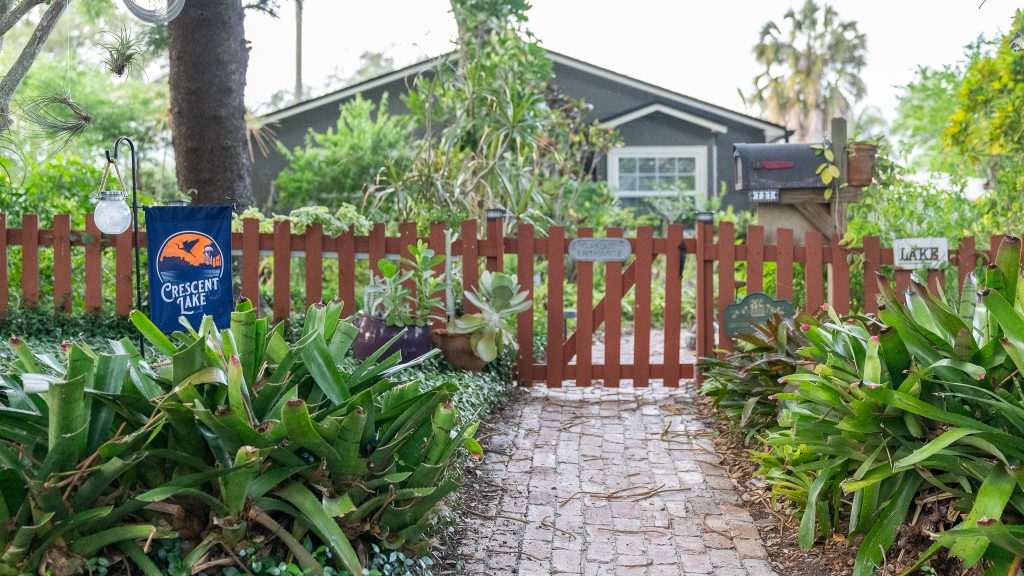
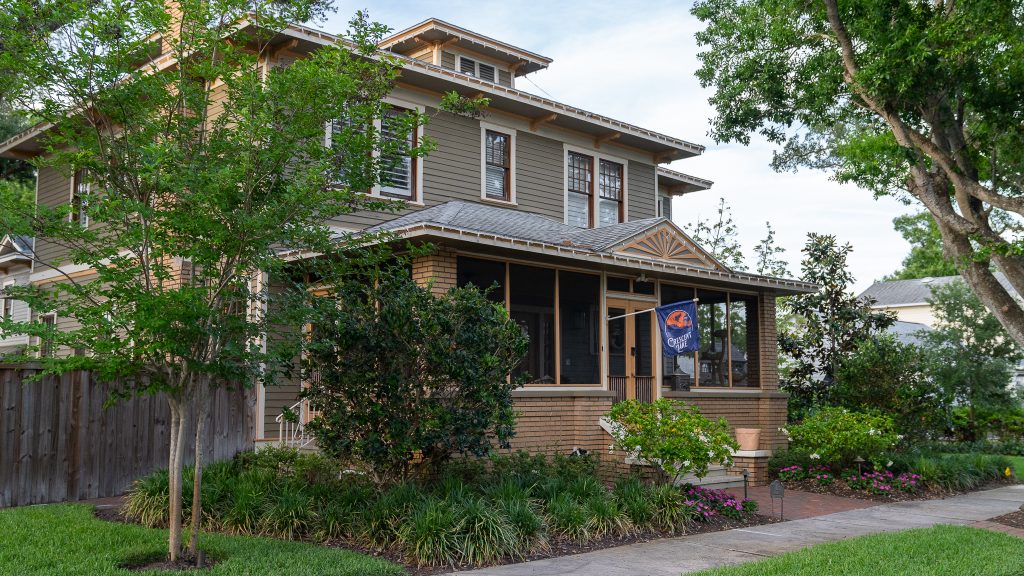
The Craftsman bungalow is Tampa Bay’s most common and most beloved historic home style, and if you’ve spent any time in Old Seminole Heights, Historic Kenwood, Crescent Lake, or Dunedin’s older neighborhoods, you’ve seen hundreds of them.
The Craftsman style emerged from the early-20th-century Arts and Crafts movement, which rejected Victorian ornamentation in favor of honest materials, exposed construction, and handcraft. The bungalow form — a one or one-and-a-half story home with a low-pitched gabled roof, wide overhanging eaves, and a deep front porch — was specifically designed for small middle-class families who wanted dignified architecture at accessible prices.
What to look for: Low-pitched gabled roofs with wide overhangs. Exposed rafter tails under the eaves. Decorative beams or braces (“knee braces”) in the gables. Tapered porch columns, often set on stone or brick piers. Deep front porches with flat or sloped roofs. Multi-pane double-hung windows, often in groups of three. Original wood siding, sometimes mixed with stucco or stone. Interiors typically feature built-in bookcases, window seats, paneled wainscoting, original hardwood floors (often longleaf pine), and masonry fireplaces.
Where to find them in Tampa Bay: Old Seminole Heights is the single largest concentration, with bungalow blocks that have earned national recognition. Historic Kenwood in St. Petersburg holds the distinction of being the largest designated bungalow district in Florida. Crescent Lake, Euclid-St. Paul, and Old Southeast in St. Petersburg all have substantial Craftsman inventory. In Pinellas County, Dunedin’s older residential streets and parts of Gulfport include excellent Craftsman examples. Across the bay, you’ll find Craftsman bungalows scattered throughout Hyde Park, particularly on the neighborhood’s more modest blocks.
Why it matters: Craftsman bungalows are the most accessible entry point into genuine Tampa Bay historic home ownership. They reward thoughtful restoration enormously — a properly restored Craftsman can transform in value — and they attract a genuinely design-conscious buyer segment that actively seeks original details like longleaf pine floors, original built-ins, and authentic front porches.
Mediterranean Revival (circa 1915–1940)
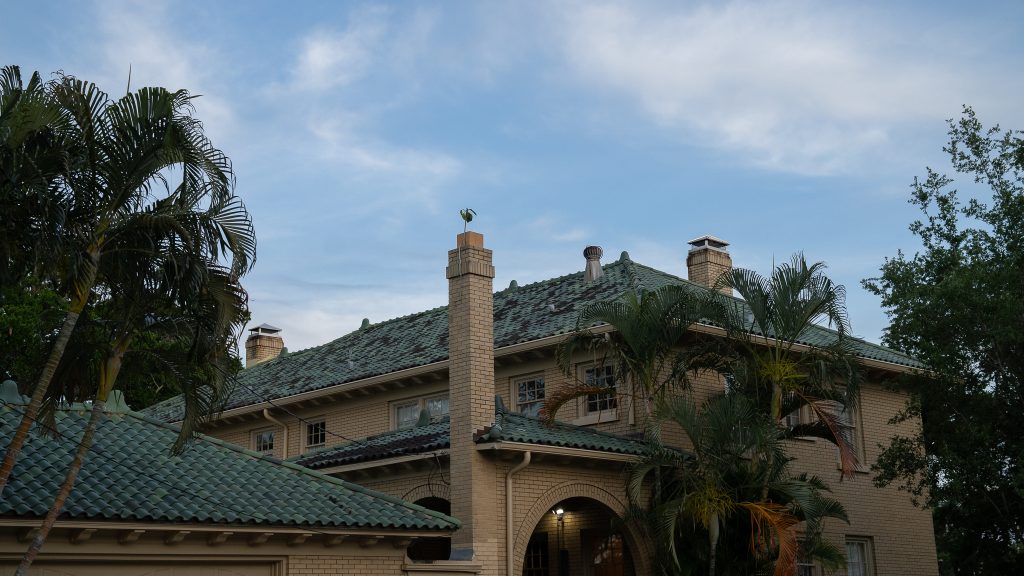
If the Craftsman bungalow is Tampa Bay’s most common historic style, Mediterranean Revival is its most iconic and most photographed. This is the style of the Don CeSar Hotel, of the grand estates along Bayshore Boulevard and Snell Isle, of Davis Islands’ entire planned community, and of countless Tampa and St. Petersburg homes from the 1920s boom era.
Mediterranean Revival drew on Spanish, Italian, and Moorish architectural traditions and was particularly well-suited to Florida’s climate and the 1920s Florida land boom aesthetic. Developers like D.P. Davis (Davis Islands) and C. Perry Snell (Snell Isle) built entire planned communities in the style. The aesthetic aligned perfectly with Florida’s sunshine-state marketing and gave the 1920s boom era its visual identity.
What to look for: Red clay tile roofs, often low-pitched and irregular in form. Stucco exteriors, frequently in white, cream, or warm earth tones. Arched doorways and windows. Decorative wrought iron balconies, window grilles, and gates. Ornamental tile work, often in entryways, around fireplaces, or as accent bands. Courtyards, loggias, and covered outdoor living areas. Asymmetrical facades. Heavy wooden doors, often with decorative hardware and small decorative windows. Decorative chimney caps. Interiors typically feature coffered or beamed ceilings, arched interior doorways, decorative tile floors, and elaborate staircases.
Where to find them in Tampa Bay: Davis Islands contains the most architecturally coherent collection in Tampa — an entire 1920s planned community of Mediterranean Revival homes on two dredge-fill islands. Snell Isle in St. Petersburg offers a comparable concentration of 1920s and 1930s Mediterranean estates, including some of the region’s most significant signature homes. Hyde Park contains substantial Mediterranean Revival inventory along and near Bayshore Boulevard. Palma Ceia, Virginia Park, and the broader South Tampa 33629 zip code include Mediterranean homes scattered throughout, many on brick-paved streets. Belleair’s historic residential areas surrounding the Belleair Country Club include notable examples from the 1920s and 1930s.
Why it matters: Mediterranean Revival is Tampa Bay’s signature luxury historic style. Well-preserved examples command meaningful premiums, and the aesthetic is genuinely timeless — even buyers who wouldn’t describe themselves as “architecture people” respond to the visual richness of a properly restored Mediterranean home.
Spanish Colonial Revival and Spanish Eclectic (circa 1915–1935)
Closely related to Mediterranean Revival and often confused with it, Spanish Colonial Revival and Spanish Eclectic are distinct styles that emphasize more specifically Spanish (rather than broadly Mediterranean) architectural influences. The distinction matters to preservationists and to buyers who know the difference.
What to look for: Smooth stucco exteriors, typically white or very pale. Low-pitched red tile roofs. Prominent arches, often grouped. Carved wooden doors with elaborate detailing. Decorative tile work, often Moorish or geometric in pattern. Wrought iron balconies, particularly second-story “Juliet” balconies. Asymmetrical facades with towers or turret-like elements. Interiors often feature arched niches, tile floors, beamed ceilings, and decorative interior ironwork.
Where to find them in Tampa Bay: Mixed throughout the Mediterranean Revival areas mentioned above. Ybor City includes some notable Spanish Eclectic and Spanish Colonial examples, reflecting the neighborhood’s Cuban and Spanish immigrant heritage. Individual homes throughout Hyde Park, Palma Ceia, and Davis Islands demonstrate clearer Spanish rather than Mediterranean influence.
Why it matters: Spanish Colonial Revival homes are rarer than Mediterranean Revival examples and often command premium pricing for their architectural distinction. For buyers and sellers who can accurately identify the style, the distinction matters in listing descriptions and in connecting with design-conscious buyers.
Colonial Revival (circa 1900–1940)
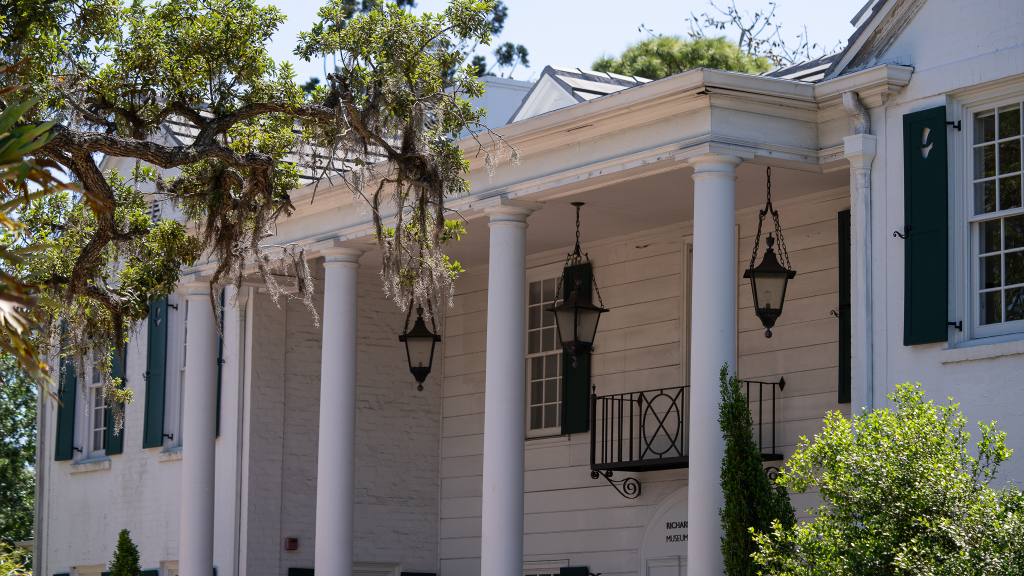
Colonial Revival architecture spread across Tampa Bay during the early-20th-century American nostalgia for the country’s colonial and early federal period. Unlike the Mediterranean styles, Colonial Revival looked north and east — to New England saltboxes, Georgian manors, and Federal townhouses — for inspiration.
What to look for: Symmetrical facades with a centered front door. Evenly spaced, multi-pane double-hung windows, often with shutters. Pediments, columns, and classical detailing around the entry. Side-gabled or hipped roofs. Clapboard or wood siding, sometimes with brick accents. Centered dormers in one-and-a-half-story examples. More formal and less ornamented than Mediterranean or Spanish styles. Interiors typically feature formal dining rooms, centered staircases, and traditional layouts with clearly defined rooms rather than open plans.
Where to find them in Tampa Bay: Hyde Park contains one of the strongest collections of Colonial Revival homes in the region, particularly the larger examples that line streets near Bayshore Boulevard. Historic Old Northeast in St. Petersburg includes substantial Colonial Revival inventory, often integrated with Craftsman and Mediterranean Revival homes on the same blocks. Crescent Lake and the older parts of Snell Isle include smaller Colonial Revival cottages. Virginia Park and Palma Ceia have Colonial Revival examples scattered throughout.
Why it matters: Colonial Revival homes tend to appeal to buyers drawn to traditional architecture, formal interior layouts, and the aesthetic continuity of the Atlantic Seaboard style. They often transact well with buyers relocating from the Northeast, who recognize the style from their prior homes and regions.
Florida Vernacular and Florida Cracker (circa 1880–1930)
Before Florida imported national architectural styles wholesale, Florida builders developed their own vernacular traditions adapted to the climate, available materials, and way of life in a subtropical frontier state. Florida Vernacular and the closely related Florida Cracker style represent the earliest residential architecture in most Tampa Bay historic neighborhoods.
What to look for: Simple wood-frame construction, often board-and-batten or drop siding. Raised foundations on piers (to allow airflow beneath the home and protect from flooding). Tin or metal roofs, originally for heat reflection and rain collection. Deep shaded porches, often wrapping around two or more sides. Tall narrow windows for cross-ventilation. Interior layouts designed for airflow — often a central dogtrot or breezeway. Simple, functional detailing. Many examples have been expanded and modified over decades, creating layered additions that tell the home’s history.
Where to find them in Tampa Bay: The oldest residential sections of Dunedin include some of the region’s best Florida Vernacular examples. Gulfport has a substantial concentration of early Florida Vernacular and Cracker-style cottages, many of which have been lovingly restored. Scattered examples exist in Safety Harbor, Tarpon Springs, and the oldest parts of the Pinellas beach communities. Ybor Heights and the earliest parts of Seminole Heights include Florida Vernacular homes predating the Craftsman era.
Why it matters: Florida Vernacular homes are the most authentically Floridian architecture in Tampa Bay. They’re often the most modest in scale and price, but they represent something irreplaceable — the building tradition that existed before Florida became a destination. Restored Florida Vernacular cottages have developed a strong design-conscious buyer following in recent years.
Queen Anne Victorian (circa 1880–1910)
Queen Anne Victorians are rare in Tampa Bay compared to the Northeast and Midwest, but they do exist, and where they exist, they’re spectacular. The Queen Anne style dominated late-19th-century American architecture with its emphasis on asymmetry, decorative excess, and variety of materials and textures.
What to look for: Asymmetrical facades with towers, turrets, or bay windows. Complex multi-gabled roofs. Wraparound porches with decorative spindle work, brackets, and ornamental columns. A variety of surface materials on a single home — clapboard, shingles, patterned trim. Decorative sawn and turned woodwork throughout. Stained or leaded glass windows. Highly ornate interior detailing including elaborate staircases, parquet floors, and decorative fireplaces.
Where to find them in Tampa Bay: Hyde Park’s oldest blocks contain Tampa’s most significant Queen Anne Victorians, a handful of which are designated historic landmarks. Historic Old Northeast in St. Petersburg has scattered Queen Anne examples, particularly near the original town center. Some of the oldest homes in Dunedin’s historic district show Queen Anne influence, though often in modified or simplified form.
Why it matters: Queen Anne Victorians are genuinely rare in Florida, and well-preserved examples are effectively irreplaceable. For the right buyer, these homes command significant premiums and represent some of the most historically valuable inventory in the region.
American Foursquare (circa 1895–1930)
The American Foursquare is one of the most functional and recognizable early-20th-century house styles, and while it’s less showy than some of its contemporaries, it represents a significant portion of Tampa Bay’s historic residential fabric.
What to look for: A distinctively square, boxy shape — typically two or two-and-a-half stories with a nearly square footprint. Hipped roof with a central dormer. Large front porch spanning most or all of the front facade. Four roughly equal-sized rooms on each floor (hence “foursquare”). Simple, symmetrical facade with little ornament. Often large and dignified without being elaborate.
Where to find them in Tampa Bay: Hyde Park contains substantial Foursquare inventory, particularly on the neighborhood’s larger and more formal blocks. Historic Old Northeast and Crescent Lake in St. Petersburg include Foursquare examples mixed with Craftsman bungalows. The Foursquare style was popular with solid middle-class families and appears throughout Tampa’s early planned streetcar suburbs.
Why it matters: American Foursquares offer substantial historic square footage — often four bedrooms and generous living space — at prices below what comparable-sized Mediterranean or Colonial Revival homes would command. For families wanting historic character with practical space, the Foursquare is often the sweet spot.
Prairie Style (circa 1900–1925)
Frank Lloyd Wright’s Prairie School influence reached Tampa Bay in diluted but identifiable form during the early 20th century. True Prairie School homes by Wright or his direct associates don’t exist in Florida, but Prairie-influenced homes — with low-pitched hipped roofs, horizontal emphasis, wide overhanging eaves, and geometric window patterns — do appear in Tampa Bay’s older neighborhoods.
Where to find them in Tampa Bay: Historic Old Northeast includes scattered Prairie-influenced homes, typically integrated with Craftsman and Colonial Revival neighbors. A handful of Prairie-style homes exist in Hyde Park and Palma Ceia.
Why it matters: Prairie homes are rare in Tampa Bay and often overlooked by listing agents who don’t recognize the style. For buyers drawn to the horizontal, nature-integrated aesthetic of early-20th-century modernism, these homes offer something that doesn’t exist in most Florida markets.
Mission Revival (circa 1890–1920)
Mission Revival preceded Mediterranean Revival in the chronology of Florida Spanish-influenced architecture, and while it’s less common than its later cousin, Mission Revival homes appear in Tampa Bay’s oldest Spanish-influenced neighborhoods.
What to look for: Smooth stucco exteriors, usually white or pale. Rounded parapets and bell-shaped gables (“Mission parapets”). Red tile roofs, often with only partial tile coverage. Arched windows and doorways. Less ornamental detailing than Mediterranean or Spanish Revival — simpler, more monastic in feeling.
Where to find them in Tampa Bay: Ybor City includes some of the region’s best Mission Revival examples, particularly in civic and institutional buildings. Scattered residential examples exist in Hyde Park and the older sections of Palma Ceia.
Mid-Century Modern (circa 1945–1970)
The era often overlooked in “historic home” conversations, but increasingly important in Tampa Bay’s architectural heritage. Mid-century modern homes — ranches, split-levels, and early modernist designs from the 1950s and 1960s — are now fifty to seventy years old and earning historic recognition in markets around the country.
What to look for: Single-story ranch forms with low-pitched or flat roofs. Clean horizontal lines. Large picture windows and sliding glass doors. Integration with outdoor spaces through courtyards, patios, and screened lanais. Open floor plans. Minimal ornamentation. Original terrazzo floors in many Florida examples. Built-ins and custom cabinetry.
Where to find them in Tampa Bay: Original Carrollwood contains some of the region’s best mid-century ranch inventory, much of it on oversized oak-canopied lots. Parts of South Tampa and St. Petersburg include mid-century homes integrated within older historic neighborhoods. Sunset Beach and some of the inland sections of the Pinellas beach communities include substantial mid-century inventory. Shore Acres in St. Petersburg is one of the region’s most significant mid-century waterfront neighborhoods.
Why it matters: Mid-century homes are the most under-valued architectural segment in Tampa Bay. Most listing agents market them as “dated ranches” rather than “authentic mid-century modern,” missing a genuinely growing design-conscious buyer pool that will pay premiums for properly preserved and presented examples. Restored mid-century homes with original terrazzo floors, clean lines, and period-appropriate renovations are commanding increasing attention in 2026.
Reading the Street: What Style Variety Tells You About a Neighborhood
One of the more interesting things about Tampa Bay’s historic neighborhoods is that most of them were built over decades, not in single architectural waves. A typical Old Seminole Heights block might have a 1912 Florida Vernacular cottage next to a 1923 Craftsman bungalow next to a 1936 Mediterranean Revival next to a 1952 ranch. That variety isn’t a flaw — it’s the neighborhood’s development story made visible.
When you understand the styles, you can read a street. You can tell whether a neighborhood was built fast in one era (Hyde Park’s original 1890s development, Davis Islands’ compressed 1920s construction) or gradually over decades (Seminole Heights, Historic Old Northeast, Dunedin’s older residential blocks). You can identify which homes are original to their era and which are later infill. You can spot later additions or modifications that altered the original architectural integrity.
For buyers, this kind of architectural literacy helps you make smarter purchasing decisions — you understand what you’re actually looking at rather than evaluating homes purely on square footage and finish level. For sellers, an accurate architectural description in your listing attracts the design-conscious buyer segment most likely to pay for original character.
When You’re Ready to Buy or Sell
Identifying architectural style is only the first step. Translating that knowledge into actual value — whether you’re buying a historic home you want to preserve, or selling one you’ve spent years restoring — requires representation that actually understands what these homes are and who buys them.
Middleton Tampa Bay specializes in historic and character homes across the region. Whether you’re researching your own home’s architectural heritage, considering a historic purchase, or preparing to list a property where architectural authenticity is part of the story — I’d be glad to help.
Call 727-871-SOLD (727-871-7653) or reach out through the Contact page to start the conversation.