
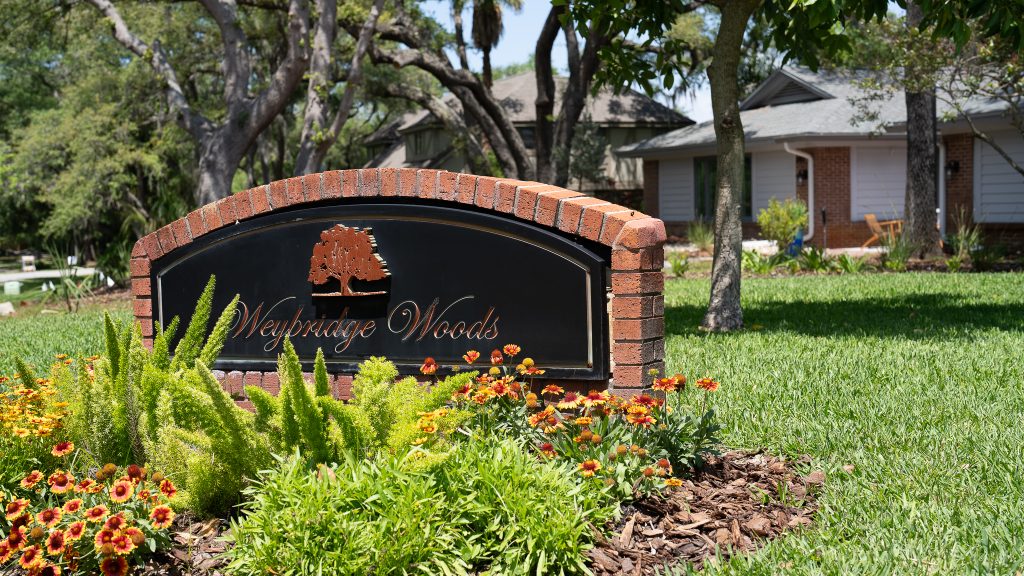
Every city has its historic neighborhoods. Most of them are one or two pockets of preserved architecture that locals point to with pride — the old part of town, the original downtown, the one street where the big houses survived. Tampa Bay is different. What makes this region genuinely unusual among American metropolitan areas is the sheer density and variety of distinct historic neighborhoods spread across both sides of the bay — each with its own architectural DNA, its own development story, and its own character that has somehow survived a century of Florida growth.
After four decades of living in Tampa Bay and years of specializing in the region’s older homes, I’ve come to think of these neighborhoods less as interchangeable “historic districts” and more as distinct small cities within the larger region. A 1920s cigar-worker casita in Ybor City has almost nothing in common with a Mediterranean Revival estate on Snell Isle, even though the two properties are twenty minutes apart. A Craftsman bungalow in Old Seminole Heights operates in a completely different market from a Colonial Revival on Crescent Lake. Understanding the differences is what separates a competent listing agent from one who can actually position a historic home to the buyers most likely to pay what it’s worth.
What follows is a short guided tour through the Tampa Bay historic neighborhoods I work in most often — not a comprehensive list, but a starting point. Each deserves its own deeper exploration, and each has its own page on this site for buyers and sellers who want to go deeper.
Dunedin: Scottish Heritage and Brick-Paved Streets
Dunedin sits about 20 miles north of downtown Tampa on the Pinellas coast, and if you want to understand what Tampa Bay looked like before the postwar suburban wave, Dunedin is the place to start. The town was founded in 1870 by Scottish immigrants — the name itself is Gaelic for Edinburgh — and its downtown still carries the small-scale, walkable, brick-paved character that defined early Florida Gulf coast communities.
The historic residential neighborhoods surrounding downtown contain a remarkable concentration of 1920s bungalows, Florida vernacular cottages, and early Craftsman homes, many on lots that were platted before automobiles were common. The Pinellas Trail runs directly through downtown, making Dunedin one of the most genuinely walkable historic small towns on Florida’s west coast. For buyers seeking authentic early-20th-century Florida architecture without the flood-zone complications of barrier island communities, Dunedin is one of the strongest value propositions in the region.
Old Seminole Heights: Tampa’s Great Bungalow District
Old Seminole Heights was Tampa’s first planned streetcar suburb, established in 1911 and built around a streetcar line that connected the Sulphur Springs area to downtown. That origin matters because it shaped everything about the neighborhood — small lots, walkable blocks, bungalow-scale residential architecture, and a density that most of Tampa’s later suburban expansion abandoned.
The neighborhood’s Craftsman bungalows and Florida vernacular cottages from the 1910s through the 1930s represent some of the most architecturally intact early-20th-century residential inventory in the state. Old Seminole Heights was both locally and nationally designated as a historic district, which means contributing homes within the boundary carry genuine preservation protection — an asset that well-informed buyers pay premiums for. This Old House magazine has ranked Seminole Heights among America’s best places to buy an old house, and Southeast Seminole Heights was named “Best Neighborhood in America” by Neighborhoods USA in 2003.
The neighborhood today is genuinely Tampa’s most design-conscious food district, with independent restaurants, craft breweries, and an active arts scene along Florida Avenue, Nebraska Avenue, and Central Avenue. Every April, more than 100 volunteers stage the Old Seminole Heights Home Tour — one of Tampa’s signature historic home events.
Ybor City: America’s Cigar Capital
Ybor City is something no other Florida neighborhood can claim: a National Historic Landmark District built by and for immigrant cigar workers starting in the 1880s. It’s one of only three National Historic Landmark Districts in the entire state, which is the highest level of historic recognition the federal government confers.
Vicente Martinez-Ybor founded the neighborhood in 1885 as a planned company town for his cigar manufacturing operations, and by 1900 Ybor City had surpassed Havana to become the world’s largest producer of hand-rolled cigars. The defining historic inventory of the district is the casita — small shotgun-style worker houses, the first 176 of which Ybor built in 1886 for his predominantly Cuban, Spanish, and Italian workforce. Many of those original casitas still stand. Restored properly, they represent some of the most authentic late-19th-century immigrant residential architecture in the country.
Ybor City is also, frankly, one of the most undervalued historic neighborhoods in Tampa Bay from a pure real estate perspective. National Historic Landmark status at price points meaningfully below Hyde Park or Palma Ceia is genuinely rare. For buyers who value architectural heritage over neighborhood prestige, Ybor offers something increasingly hard to find in 2026.
Hyde Park: Old South Tampa Prestige
Hyde Park is the oldest and most established residential neighborhood in South Tampa, developed beginning in the 1880s when Henry Plant’s railroad opened Tampa to national visitors. The Historic Hyde Park National Register district preserves Queen Anne Victorians, American Foursquares, Colonial Revivals, and early Mediterranean Revival estates along streets that run down to Bayshore Boulevard — the 4.5-mile continuous sidewalk that has defined South Tampa’s residential identity for a century.
Hyde Park pricing sits at the top tier of Tampa historic neighborhood inventory, reflecting its position within the A-rated Plant High School boundary, its walkability to Hyde Park Village’s boutique retail and dining, and its proximity to downtown Tampa. For buyers seeking the most prestigious historic South Tampa address, Hyde Park is the answer.
Palma Ceia & Virginia Park: The Plant High School Corridor
If Hyde Park is the historic front door of South Tampa, Palma Ceia and Virginia Park are the rooms inside — the residential heart of the 33629 zip code, widely reported as one of the most-searched neighborhoods for homes for sale in the United States. The neighborhood’s brick-paved streets, 1920s Spanish and Mediterranean Revival estates, Craftsman bungalows, and luxury new construction from builders like TB Homes, David Weekley, Milana, Mobley, and Homebound together create a residential market unlike anywhere else in Tampa.
Two things make Palma Ceia genuinely distinctive in 2026. First, the A-rated Plant High School boundary is the single largest driver of pricing in the 33629 zip code — school boundaries affect value at the block level in ways that reward precise representation. Second, while much of South Tampa has significant flood-zone exposure, a substantial portion of Palma Ceia and Virginia Park sits in FEMA Flood Zone X where no flood insurance is required. In a post-Helene Tampa Bay market where flood zone status has become central to every serious buyer conversation, this is a real and increasingly valuable advantage.
Davis Islands: The 1920s Dredge-Fill Marvel
Davis Islands doesn’t exist on any map of Tampa before 1924. The two islands were created by D.P. Davis, one of Florida’s boom-era developers, who dredged them out of the bay and sold the entire planned community in a single 31-hour real estate event that remains one of the most extraordinary sales events in American development history.
What Davis built — a planned community of Mediterranean Revival estates surrounding a small airport (Peter O. Knight), a yacht basin, and curvilinear tree-lined streets — is still essentially intact today. Davis Islands is home to some of Tampa’s most significant historic estates, with past and present residents including Derek Jeter and Tom Brady. The neighborhood’s combination of architectural coherence, walkability, and waterfront access is genuinely unusual.
Historic Old Northeast: St. Petersburg’s Signature Neighborhood
Across Tampa Bay, St. Petersburg’s Historic Old Northeast is arguably the single most architecturally coherent historic neighborhood in the region. Built primarily between 1911 and the 1930s on a grid of streets that run from the downtown waterfront to Coffee Pot Bayou, Old Northeast contains one of the largest concentrations of Craftsman bungalows, Mediterranean Revival, Colonial Revival, and Prairie-style homes in Florida.
The neighborhood is on the National Register of Historic Places, and its defining physical features — brick-paved streets, hexagonal sidewalks, granite curbstones, and the signature “Granada Terrace” entryway gates — have been preserved with remarkable care for more than a century. Old Northeast pricing has moved substantially over the past decade as St. Petersburg’s downtown has transformed, but the neighborhood’s underlying architectural integrity has remained its defining asset.
Crescent Lake: Non-Flood Zone Character Homes
Crescent Lake is the small but distinctive neighborhood immediately northwest of Old Northeast, built around the 52-acre Crescent Lake Park. Where Old Northeast is grand in scale, Crescent Lake is intimate — Craftsman bungalows, Colonial cottages, and Florida vernacular homes on smaller lots, many within a five-minute walk of the lake itself.
One detail that has become increasingly important post-Helene: Crescent Lake sits on higher ground than much of St. Petersburg’s waterfront, and a meaningful share of the neighborhood is in FEMA Flood Zone X. In a 2026 market where buyers are scrutinizing flood zones before they scrutinize anything else, Crescent Lake has quietly become one of the strongest-positioned historic neighborhoods in St. Petersburg.
Snell Isle: Perry Snell’s 1927 Luxury Vision
Snell Isle is St. Petersburg’s historic luxury waterfront address — a 300-acre peninsula developed beginning in 1927 by C. Perry Snell, who transformed a muddy tidal area into a planned Mediterranean-themed luxury community. Snell sold over $7 million in lots during his original development — an extraordinary figure for the era.
The neighborhood’s defining architecture is Mediterranean Revival and Spanish Colonial Revival, concentrated along Snell Isle Boulevard and the waterfront streets that open onto Tampa Bay and Coffee Pot Bayou. The Vinoy Golf Club (opened 1925) runs through the heart of the island. Snell Isle is a luxury-tier market with median sale prices reaching $1.5 million and signature waterfront estates regularly transacting above $5 million — but it’s also an architecturally significant historic neighborhood in its own right.
Crescent Heights, Historic Kenwood, and the Broader St. Petersburg Historic Fabric
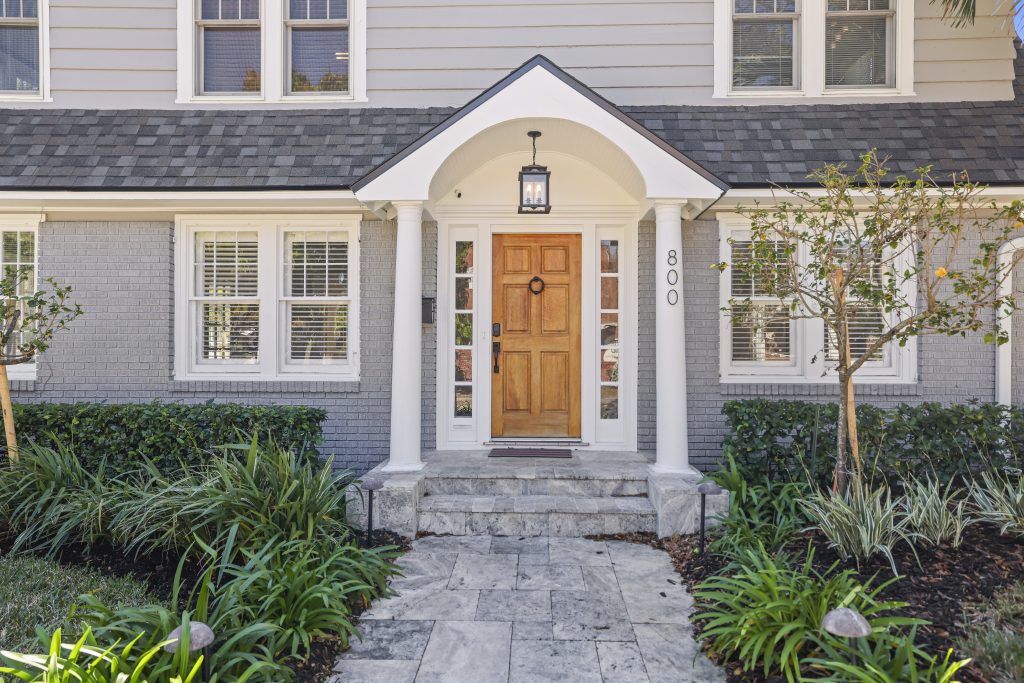
Beyond the headline neighborhoods, St. Petersburg has a dense fabric of smaller historic districts worth knowing about: Historic Kenwood (the largest designated bungalow district in Florida), Crescent Heights, Euclid-Saint Paul, Historic Uptown, Old Southeast, and Round Lake. Each has its own character, pricing profile, and buyer appeal. Together, they represent one of the most substantial collections of early-20th-century residential architecture in the Southeast.
What These Neighborhoods Actually Have in Common
Despite their differences, Tampa Bay’s great historic neighborhoods share a few patterns worth knowing if you’re thinking about buying or selling in one.
Most were built between roughly 1900 and 1940, during the era that shaped much of what we now call American residential architecture — Craftsman, Colonial Revival, Mediterranean Revival, Spanish Colonial Revival, and Florida vernacular styles dominate. Many were originally organized around streetcar lines, small-town downtowns, or planned community visions, which is why they retain a walkable, human-scale character that almost no Florida community built after 1960 managed to preserve.
Most also face a genuinely similar set of 2026 market realities. Post-Helene flood zone scrutiny has bifurcated pricing sharply between elevated, mitigated, or interior inventory and older, non-elevated, storm-affected properties. Post-Surfside legislation has transformed the condominium market in ways that affect any historic neighborhood with significant condo inventory. Insurance costs, wind mitigation standards, and historic district preservation review requirements have all become central to every serious transaction in ways they weren’t five years ago.
What this means practically is that representing a historic home properly in 2026 requires more than knowing the neighborhood’s name. It requires understanding the specific block, the specific flood zone, the specific historic district boundary, the specific school zone, the specific insurance history — and how all of those factors together affect what a property is actually worth to the buyer most likely to value it.
Where to Start
Each neighborhood referenced above has its own dedicated page on this site, with detailed market data, pricing tiers, architectural profiles, and neighborhood-specific information for buyers and sellers. If you’re researching a specific neighborhood, start there.
If you’re earlier in your search — trying to understand which Tampa Bay historic neighborhood might fit your goals, budget, and lifestyle — the conversation is worth having before you get deep into listings. I work with buyers and sellers across all of these neighborhoods, and I’ve spent decades learning the differences between them at a level most listing agents never reach.
Call 727-871-SOLD (727-871-7653) or reach out through the Contact page to start the conversation.