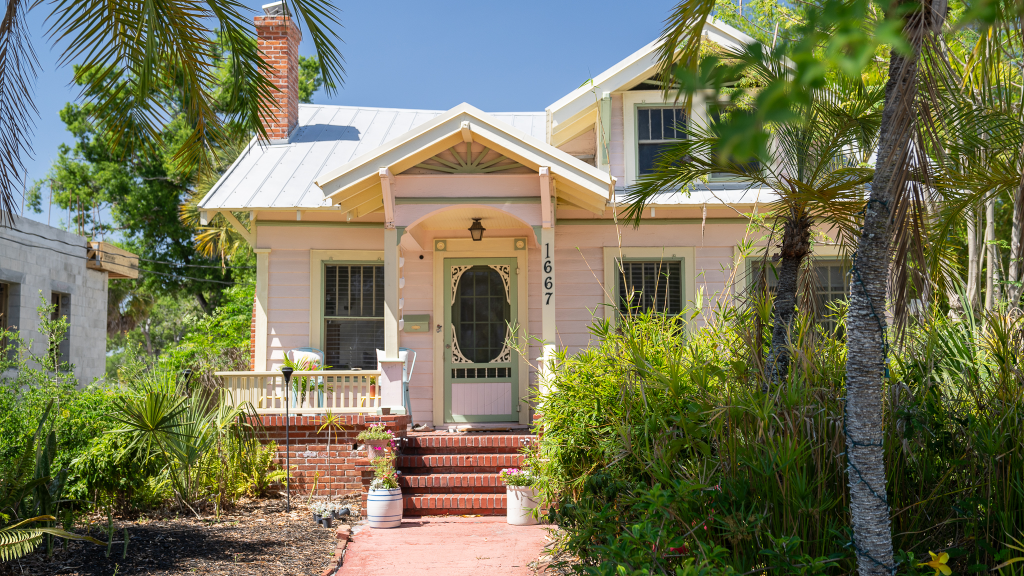
There is a moment, walking Laurel Park, when the pace of the world slows without asking permission. The noise of downtown Sarasota — the restaurants along Main Street, the traffic along US 41, the bustle of an expanding city — recedes within a block or two. What takes its place is something gentler. Brick-paved streets still bearing the imprint of their 1920s manufacturers. Craftsman bungalows with deep front porches and tapered columns on stone piers. Small Mediterranean Revival cottages in the manner of Thomas Reed Martin, their stucco walls warm against the late-afternoon light. Oak trees that have been growing above these streets for the better part of a century, their canopies meeting overhead in an unbroken arch. A corner grocery replaced long ago by a quiet residence. An old apartment building — Mission Revival in style, a century in place — tucked along Ohio Place as if it has always belonged there.
Laurel Park is not the most photographed neighborhood in Sarasota. That distinction belongs to more performative parts of the city — the bayfront, the Ringling estate, the St. Armands Circle. What Laurel Park offers instead is a different and rarer thing: the genuine continuity of a real residential neighborhood that has remained, against substantial odds, what it was designed to be.
Where Laurel Park Sits, and Why That Matters
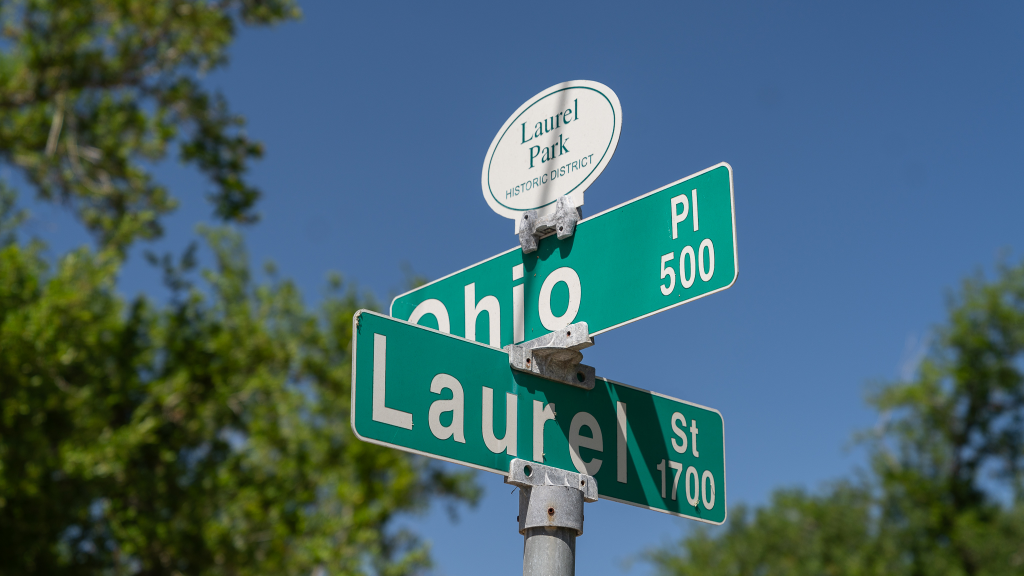
Laurel Park occupies roughly fifty acres immediately south of downtown Sarasota. Its boundaries — Morrill Street to the north, Orange Avenue to the west, Washington Boulevard to the east, and the area near Lafayette Court and Julia Place to the south — place it in unusually close proximity to the city’s commercial core. Downtown Sarasota, with its restaurants, galleries, opera house, theaters, and shopping, is a short walk away. The bayfront is minutes distant. The Hudson Bayou and a kayak launch sit along the neighborhood’s edge. A multi-use recreational trail — the Alderman MURT — passes through the area and connects to broader Sarasota bike and pedestrian infrastructure.
This location explains much of what Laurel Park has become. The neighborhood was developed specifically to house the working population of downtown Sarasota during the city’s greatest period of growth — the Florida Land Boom of the 1920s. It was never intended as a destination. It was intended as a place where people lived, and where they could walk to the commercial districts where they worked. A century later, that intention has aged into something unusual in Florida: a genuinely walkable, genuinely residential, genuinely historic urban neighborhood within sight of its own downtown.
Origins in the 1920s: The Burns Era and the Boom
The story of Laurel Park begins with Owen Burns. A native of Maryland who arrived in Sarasota in 1910, Burns became, through steady acquisition across the 1910s and 1920s, the largest individual landowner in the city. At his peak influence, Burns owned more than seventy-five percent of the land within the original Sarasota city plat drawn by J. Hamilton Gillespie. He founded Burns Realty Company and Burns Construction Company. He built bridges, seawalls, bayfront points reclaimed from Sarasota’s shallow shoreline, paved streets, commercial buildings, and the residential subdivisions that would shape downtown Sarasota’s residential character for generations.
Laurel Park sits entirely within what were once the Burns holdings. The neighborhood developed as a combination of several smaller subdivisions platted in the 1920s, filling in gradually over the decade as Sarasota’s population grew and the demand for modest-income housing near downtown expanded. Unlike the nearby Burns Court subdivision — Burns’s celebrated 1924-1925 project of fifteen Mediterranean Revival bungalows designed by architect Thomas Reed Martin, which was conceived as a cohesive architectural ensemble and is today a separate designated historic district — Laurel Park grew more organically. It was built by multiple owners, multiple builders, and across multiple years. The resulting architectural variety is itself part of what defines the neighborhood’s character.
According to the historical record documented in the National Register nomination, Laurel Park was primarily settled by craftsmen, shopkeepers, office workers, journalists, press operators, tailors, and the everyday working population of downtown Sarasota during the boom years. A narrow strip along Oak Street was set aside for upper-middle-income construction, which is why a handful of the neighborhood’s larger Mediterranean Revival residences cluster in that area. The remainder of Laurel Park was working-class residential — bungalows, small cottages, duplexes, and apartment buildings built to accommodate the population that actually made the city function.
This social composition matters. Laurel Park was not a showpiece neighborhood. It was a neighborhood of substance — where people raised families, rented apartments, walked to work in the morning, and returned home in the afternoon to houses built with honest materials and attention to craft. That substance has carried forward. The neighborhood today still reads as lived-in rather than curated.
Architectural Variety as a Defining Feature
The National Register nomination for Laurel Park identifies six principal architectural styles within the district: Frame Vernacular, Masonry Vernacular, Bungalow (sometimes called Craftsman), Mission Revival, Colonial Revival, and Mediterranean Revival. This variety, concentrated within fifty walkable acres, is one of the qualities that makes Laurel Park architecturally distinctive.
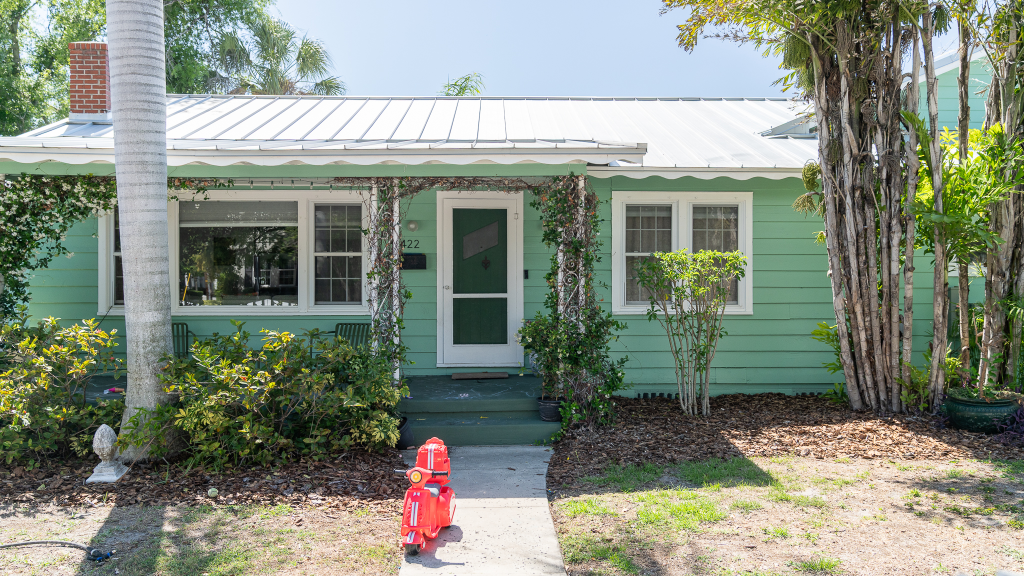
The Craftsman bungalow is the most common style in Laurel Park, and for understandable reasons — it was the dominant style for middle-class and working-class residential construction across the United States from roughly 1910 through the mid-1930s, and the Sarasota of the boom era adopted it enthusiastically. A walk along the neighborhood’s interior streets reveals dozens of these homes, most between 1,000 and 1,800 square feet, set close to the sidewalk with deep front porches, low-pitched gabled roofs with wide overhangs, decorative knee braces in the gable ends, tapered wood or stucco columns on stone or brick piers, multi-pane double-hung windows often grouped in twos and threes, and the interior hallmarks of the style — built-in cabinetry, original hardwood floors, brick fireplaces, and coffered ceilings in the larger examples.
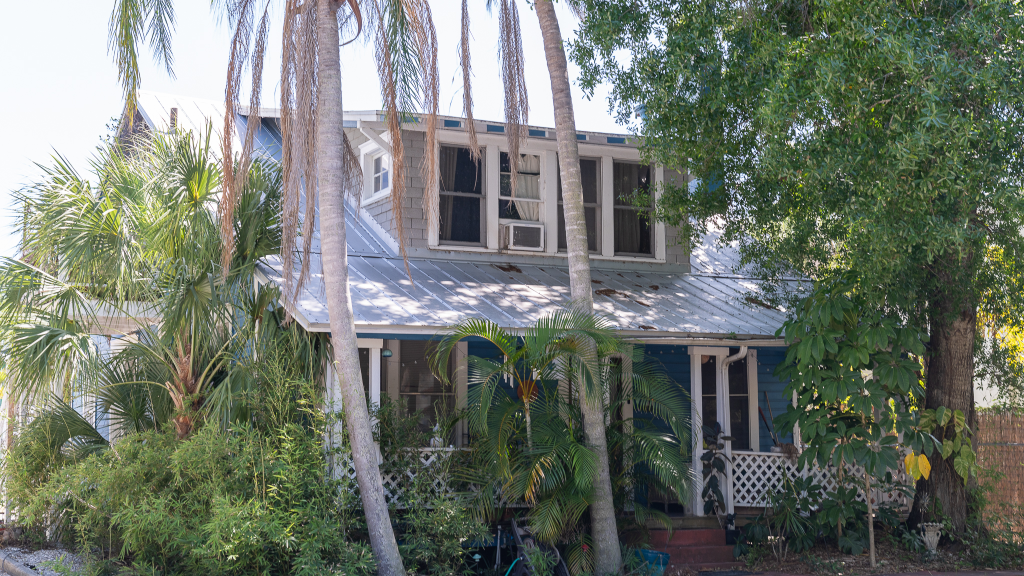
Frame Vernacular and Masonry Vernacular — the plainer and more utilitarian styles — fill much of the remaining residential fabric. These are the cottages and smaller homes built without pronounced stylistic intention, representing what Sarasota craftsmen actually built when they were not following a specific stylistic playbook. Tin roofs. Simple wood siding or stucco. Functional porches. Raised foundations on piers for airflow and modest flood resilience. These homes are often the least expensive in the neighborhood today, and they remain among the most charming — precisely because they feel honest about what they are.
Mediterranean Revival makes its most prominent Laurel Park appearance along the Oak Street corridor, where the neighborhood’s larger homes cluster. Red barrel tile roofs, stucco exteriors in warm cream and earth tones, arched doorways and windows, and ornamental tile or wrought iron detailing characterize these residences. The style arrived in Sarasota via the tastes of Owen Burns, John Ringling, Thomas Reed Martin, and the broader Florida Land Boom imagination of the 1920s, which borrowed from Spanish, Italian, and Moorish precedents to evoke a Mediterranean lifestyle for a subtropical American audience. In Laurel Park, the Mediterranean Revival examples are generally smaller and less theatrical than the Burns Court bungalows or the Ringling-era estates elsewhere in the city, but they are genuine and architecturally significant.
Mission Revival — the precursor and cousin to Mediterranean Revival — appears most notably at the apartment complex at 325 Ohio Place, a multi-unit structure that has served Laurel Park renters and residents for a century. Colonial Revival homes, with their symmetrical facades, classical detailing, and Colonial-era historical references, are scattered throughout the district, providing counterpoint to the more regionally inflected styles.
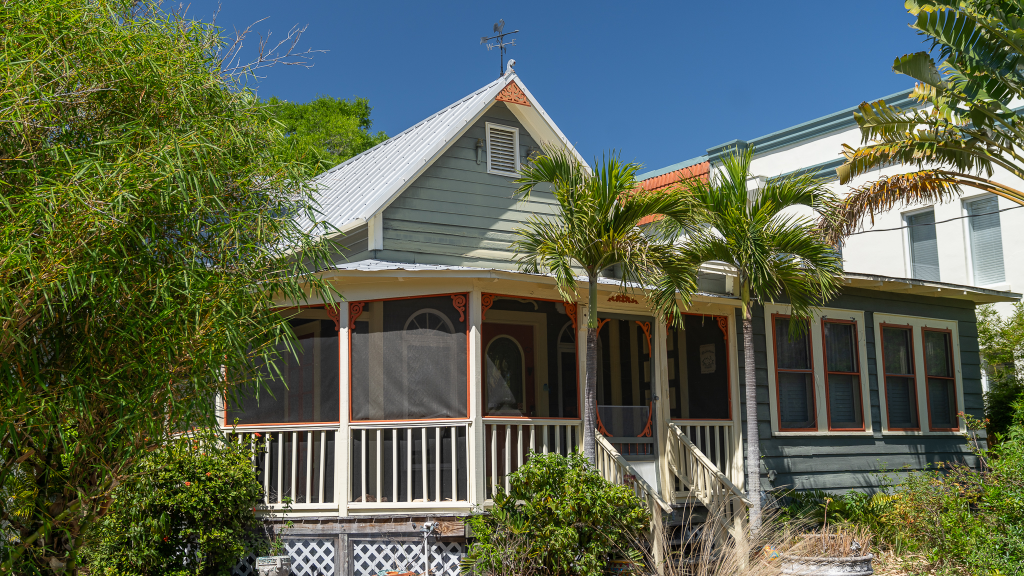
The effect of walking Laurel Park is cumulative. Individual homes are interesting; the collection is extraordinary. Within a few blocks, a visitor can encounter a 1922 Craftsman bungalow, a 1925 Mediterranean Revival cottage, a 1923 Frame Vernacular double, a 1928 Colonial Revival residence, and a 1924 Mission Revival apartment building — each built by different hands for different clients, each reflecting the sensibilities of its specific moment, each contributing to a streetscape that holds together despite its variety.
The Streetscape: Brick, Canopy, and Scale
Much of Laurel Park’s atmosphere is not architectural in the strict sense. It comes from the relationship between the homes, the streets, and the trees — the three elements that together define what walking the neighborhood actually feels like.
The streets are a physical record of the 1920s. Many of Laurel Park’s roads retain their original brick paving, installed by the Burns and McAlpin Paving Company a century ago. Where asphalt has been laid over top in past decades, the brick frequently reemerges at intersections, along edges, or in sections where resurfacing has worn away. Walking these streets, a careful eye can often spot the brick maker’s imprint on individual pavers — a form of historical provenance embedded in the ground itself.
The sidewalks are narrow by contemporary standards. Laurel Park was platted before modern zoning codes and before the automobile entirely dictated the pattern of American residential development. The result is a streetscape that feels more European than suburban — close-set homes, intimate sidewalk widths, and a sense that the street belongs equally to pedestrians and to vehicles rather than being primarily a conduit for traffic.
The tree canopy is the neighborhood’s living architecture. Mature live oaks, many of them a century old, arch above the streets and create continuous shaded tunnels during the warmer months. These trees were not planted by a landscape architect as part of a master plan. They have been growing since before most of the homes beneath them were built, and their scale now defines the neighborhood’s visual character as powerfully as any piece of built architecture.
Lot sizes throughout Laurel Park are generally modest — typical early-20th-century residential dimensions of 50 by 125 feet or smaller, with houses set relatively close to the street and to each other. This density is itself part of what makes the neighborhood walkable. Residents encounter their neighbors on sidewalks and front porches. Dog walkers pass each other at intersections. Children play in small front yards and at the neighborhood’s namesake park — Laurel Park proper, a small public space along Laurel Avenue between Ohio and Rawls that was dedicated in 1994 and includes a gazebo, playground, and open lawn.
None of this is accidental. It is what a neighborhood looks like when it was designed for people rather than for cars, and when subsequent generations have had the collective discipline to preserve what was there rather than replace it.
Preservation: The 2008 National Register Designation
Laurel Park’s formal recognition as a historic district came later than the neighborhood’s residents might have hoped. On March 11, 2008, the Laurel Park Historic District was listed on the National Register of Historic Places, becoming the seventh historic district in the City of Sarasota to receive that designation.
The path to listing began with a grassroots effort by Laurel Park residents in 2005. The City of Sarasota offered assistance in 2006 and retained a preservation consultant to prepare the formal nomination. After a year of review by the Florida State Historic Preservation Office, the state formally nominated the district to the National Register, and the designation was approved in 2008. The nomination identifies 270 contributing structures within the district, along with two individually designated National Register buildings and twenty structures that have also been locally designated historic by the City of Sarasota.
The significance of this is difficult to overstate. Between the 1920s and 2008, Laurel Park faced the same pressures that destroyed most of Florida’s early-20th-century residential architecture — the Great Depression, World War II, postwar suburbanization, 1960s and 1970s urban renewal, and finally the development pressures of the 1990s and 2000s as downtown Sarasota’s value accelerated. That Laurel Park survived with 270 contributing structures intact is the result of a century of quiet, cumulative decisions by residents, owners, and local officials to preserve rather than replace.
The neighborhood has also established the Laurel Park Overlay District — a zoning tool that provides community input into new commercial construction within the district — following a contentious early-2000s debate about whether Laurel Park should be included in Andres Duany’s new Downtown Master Plan. The residents who wanted to preserve the neighborhood’s strictly residential character ultimately prevailed, though the compromises reached along the way continue to shape the district’s relationship with downtown development pressures.
Preservation in Laurel Park is not a finished state. It is an ongoing practice, sustained by the attention of current residents and the Laurel Park Neighborhood Association, originally founded in 1984 by Jeffrey and Susan Harris as the Morrill Mound Neighborhood Association and subsequently renamed.
Notable Residents and Cultural Significance
The National Register nomination identifies several individual residences of particular note, and the neighborhood’s historical record documents various craftsmen, journalists, civic figures, and Sarasota business leaders who called Laurel Park home during the boom years. The Sarasota Herald — the city’s daily newspaper during much of the 20th century — had its editorial headquarters nearby, and many of the neighborhood’s residents during the 1920s and 1930s worked in journalism, printing, and related trades. The county courthouse also stood in or near the district during parts of the early 20th century, lending the area a civic character that complemented its residential identity.
In the interest of responsible historical presentation, I will not name specific individual residents beyond those documented in the public record of the National Register nomination and the Laurel Park Neighborhood Association’s published materials. Readers interested in particular documented residents — Joseph H. Humphries, Dr. Walter Kennedy, Irving M. Nelson, and others identified in the neighborhood association’s walking tour materials — can find more detailed information through the Laurel Park Neighborhood Association directly.
What is beyond question is that Laurel Park served, and continues to serve, as a neighborhood where people of genuine civic engagement have long made their homes. The density, walkability, and proximity to downtown Sarasota have consistently attracted residents who value neighborhood life over detached suburban living — journalists, attorneys, artists, musicians, teachers, and other professionals whose presence has given the district its continuing character.
Why Laurel Park Still Matters
There is a case to be made, and I want to make it directly, that Laurel Park is among the most important residential neighborhoods in Florida — not because it contains the grandest architecture or the most celebrated names, but because it represents something that almost no comparable Florida market has preserved.
Most Florida cities that experienced significant 1920s growth have lost the residential fabric of the boom era. The homes were demolished for parking lots, highway expansions, commercial development, or urban renewal schemes. What survives tends to be either individual landmark properties marooned in contemporary contexts, or a handful of carefully preserved showpiece neighborhoods where the architecture has effectively been museumified. Laurel Park is neither. It is a working neighborhood of fifty acres, 270 contributing buildings, active residents, functioning housing stock, and a living relationship between past and present that defines what urbanist theorists mean when they talk about the qualities of the best traditional American neighborhoods.
The organization Strong Towns — which has become a leading voice in American urbanist discourse — has specifically identified Laurel Park as a model for the kind of walkable traditional neighborhood development that the broader American building industry has largely forgotten how to create. Andres Duany, the new-urbanist architect whose master planning work has influenced cities across the country, has spoken of Laurel Park as exemplary. Sarasota Magazine has repeatedly featured the neighborhood as a uniquely desirable urban residential alternative. The reasons for this recognition are straightforward: Laurel Park does, in preserved 1920s form, what contemporary new-urbanist developers attempt to recreate from scratch at much higher cost and with substantially less success.
For buyers, the neighborhood offers a specific proposition. You can live in downtown Sarasota without living in a downtown condominium tower. You can own a home with architectural character that simply does not exist in new construction. You can walk to restaurants, galleries, theaters, and shops, and you can do so on streets designed for walking rather than adapted for it. You can participate in a civic and residential community where neighbors actually know each other, where the neighborhood association is genuinely active, and where the shared project of preserving what matters is visible in the daily life of the district.
For photographers, architecture lovers, and preservationists, Laurel Park offers the kind of subject matter that rewards sustained attention. The variety of architectural styles, the quality of light filtered through the oak canopy, the material details of century-old craftsmanship, and the simple visual pleasure of streets that have been loved for generations — these are the conditions in which good photography and good looking naturally happen.
For Sarasota itself, Laurel Park is something like a civic reference point. It is the neighborhood that answers the question of what the city actually looked like during its most consequential era of growth — the era that defined its architectural identity, its cultural ambitions, and its emergence from small Gulf coast settlement into the metropolis it has since become. You can read about this history in books. You can see individual artifacts in museums. Or you can walk Laurel Park and encounter it directly, on the ground, in its living form.
A Note on Older Homes and What They Carry
There is something that older homes carry that newer homes cannot. It is not simply age, or material quality, or the accumulated craft of generations of builders and owners — though all of these are real. It is the accumulated presence of the lives that have been lived within them.
A 1925 Craftsman bungalow in Laurel Park has been home to a century of morning coffees, evening meals, birthday parties, quiet Sundays, difficult conversations, children growing up, parents growing older, and the rhythms of daily life repeating themselves in ways that leave residue in the walls. You cannot quantify this. You cannot replicate it. You can only inherit it when you become the next person to live in a home that has been doing this work since the boom era began.
This is, I think, the deepest reason that neighborhoods like Laurel Park matter. They are not just records of how cities grew. They are records of how people actually lived — and in walking them, in photographing them, in preserving them, and in continuing to make them our own, we participate in a form of cultural continuity that newer construction, however excellent, cannot match.
Laurel Park will remain what it is only as long as people continue to value what it is. The preservation battles of the early 2000s demonstrated that the neighborhood’s survival is not automatic. The economic pressures that would see these fifty acres redeveloped at higher density and lower character have not disappeared. The continuing work of the Laurel Park Neighborhood Association, the active civic engagement of current residents, and the broader Sarasota recognition of what the district represents are what keep the neighborhood functioning as a living historic community rather than as a static artifact.
For those who visit — for photographers drawn to its details, for architecture lovers who understand its significance, for buyers considering a home within its boundaries, or for anyone simply walking its sidewalks on a late afternoon — Laurel Park offers an uncommon gift. It is a real place. It has been a real place for a century. And in a state that has too often lost its real places to the pressures of growth, that continuity is itself a form of beauty worth honoring.
Neighborhoods like Laurel Park reward representation that understands what they actually are. As a Realtor who has built my practice around historic and character homes across the greater Tampa Bay and Sarasota region, I’ve come to believe that the right home in a neighborhood like this one is not found through a filtered MLS search. It’s found through the slower work of walking the streets, reading the architecture, understanding what original features are worth preserving and what later modifications have quietly undone, and knowing which blocks within the district carry which specific qualities. If you are considering buying or selling a home in Laurel Park — or in any of Florida’s genuinely historic neighborhoods — I would welcome the conversation. Call 727-871-SOLD (727-871-7653) or reach out through the Contact page to start.

A further reflection. Some of the thoughts I could not quite fit into the above — specifically on what Laurel Park teaches about the walkable neighborhoods we are largely failing to build today, and on why new urbanism has spent four decades attempting to recreate what ordinary craftsmen in the 1920s simply built as a matter of course — I developed separately in a LinkedIn article this week. If the broader question of what Laurel Park means for American cities is of interest, you can read it here. Click Here To Read On…