
Published in the Journal at Historic Homes Tampa Bay
The first land deed recorded within what is now Dunedin, Florida dates to 1852 — only seven years after Florida itself became a state. The town that subsequently grew on this stretch of Gulf coast, between what would become Tampa and Tarpon Springs, would emerge as one of the very oldest incorporated communities on the entire Florida Gulf coast. By the time the formal incorporation papers were filed in 1899, Dunedin had already been functioning as a settled community for nearly half a century, with Scottish merchants, citrus growers, sea captains, carpenters, and the diverse cast of pioneers who built early Florida already deeply embedded in its civic and economic life.
I have lived in Dunedin since 2013. I serve on the Board of Directors of the Dunedin History Museum. I have walked these streets in every season for more than a decade, photographed the historic homes that line them, researched the families who built them, and worked with clients who have purchased and sold homes within the town’s historic core. What follows is the most comprehensive treatment of Dunedin’s historic residential architecture that I have written to date — intended as a definitive reference for buyers, owners, preservationists, and anyone who cares about understanding what Dunedin’s historic homes actually represent.
This is a longer piece than my Journal entries usually run. Dunedin’s historic landscape deserves the depth.
The Scottish Founding That Shaped Everything
The town’s defining historical fact is its Scottish origin. In the early 1880s, two Scottish merchants — John Ogilvie Douglas and James Somerville — established a general store on the Dunedin waterfront and became the central figures in the early settlement’s commercial life. Both men were natives of Scotland, and both brought with them the cultural orientations, architectural preferences, and civic ambitions of late-nineteenth-century Scottish immigrant life.
Before the Scottish merchants’ arrival, the settlement that would become Dunedin had been informally known as Jonesboro, after early settler George L. Jones who had attempted to establish the name in 1870. Douglas and Somerville, in 1882, filed a petition to rename the town in recognition of its emerging Scottish character. The name they chose was Dunedin — derived from Dùn Èideann, the Scottish Gaelic name for Edinburgh, Scotland’s capital. The renaming was both a cultural assertion and a marketing decision, signaling that the town intended to become something more substantial than a generic Florida frontier settlement.
By 1885, the town was formally established under the Dunedin name. Formal municipal incorporation followed in 1899, making Dunedin the oldest incorporated town on Florida’s Gulf coast between Key West and Cedar Key — a distinction that continues to matter for understanding the town’s architectural inventory today. Cities incorporated earlier than 1900 tended to develop with the architectural conventions of the late nineteenth century. Cities that emerged primarily after 1900 tended to develop with the architectural conventions of the early twentieth century. Dunedin straddles both eras, and its historic homes reflect this transitional position.
By the time Dunedin’s population reached approximately 350 residents in 1913 — a remarkably small number for what was already an established town with a documented history of nearly half a century — the architectural foundations of the historic core had been substantially laid. The earliest surviving homes from this period are now well past their hundred-year birthdays. Several individual residences from the 1880s and 1890s remain extant, including the J.O. Douglas home on Scotland Street, which still stands as a private residence and represents one of the oldest surviving structures in the original Dunedin community.
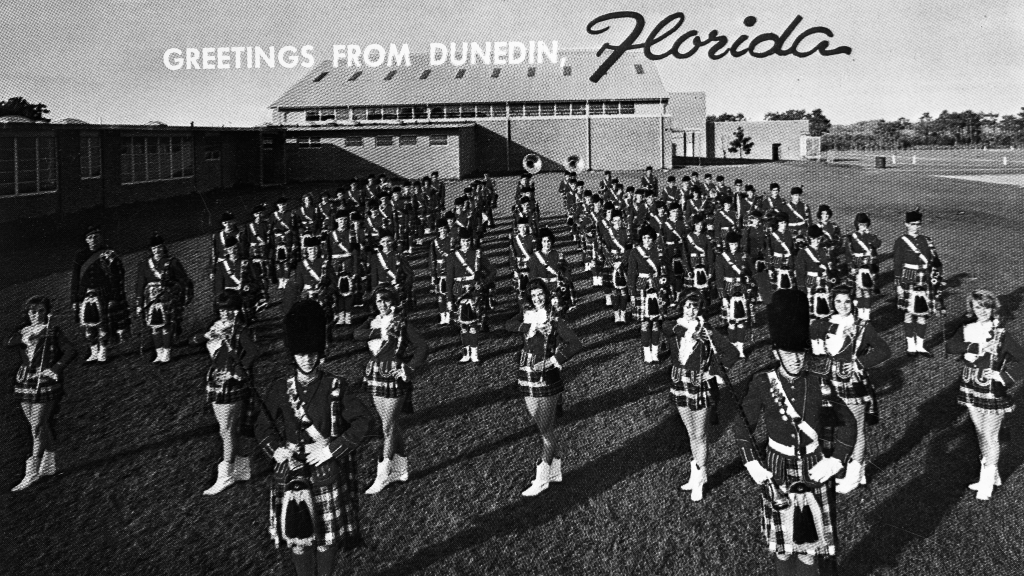
The Scottish heritage embedded itself in the town’s identity in ways that have continued across the subsequent 140 years. Streets bear Scottish names — Scotland Street, Highland Avenue, Edinburgh Drive, and others. The high school’s marching band has been the kilted Dunedin High School Scottish Highlanders since the 1950s. The annual Dunedin Highland Games and Festival, held since 1966, is the largest Scottish heritage festival in Florida. The town has formal sister-city relationships with Stirling, Scotland. The Scottish saltire flies at civic events alongside the American flag. And the architectural sensibilities introduced by the Scottish founders and their descendants — preference for substantial, dignified, well-built construction over speculative or showy development — shaped the residential building patterns of the town’s foundational decades in ways still visible today.
The Era of the Schooner Port
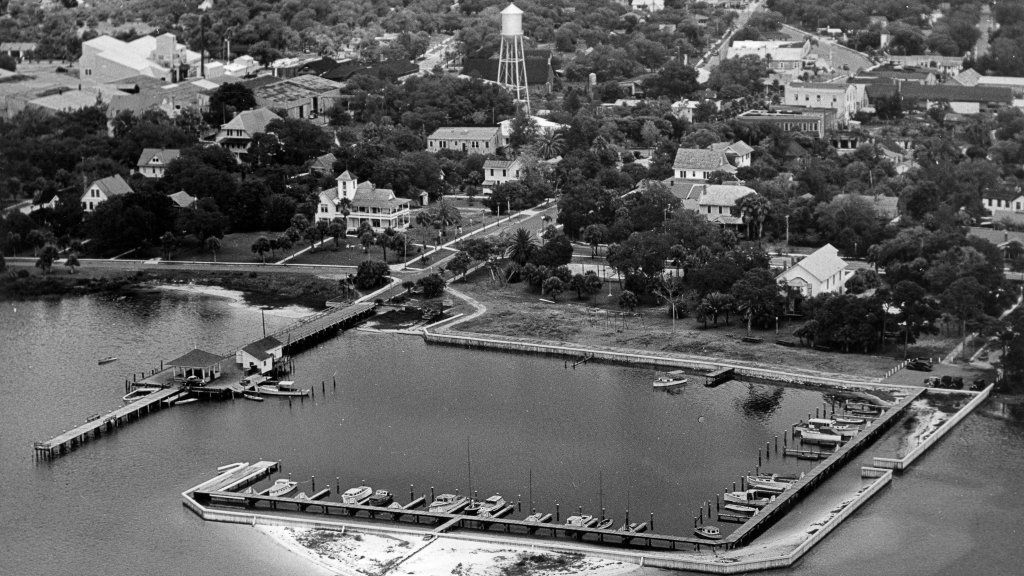
Before Dunedin became known primarily as a residential town and beach destination, it was — for several decades — one of the most active small ports on the entire Florida Gulf coast.
The Dunedin dock, extending substantially out into the harbor to accommodate deeper-draft sailing vessels, allowed the town to become what early-twentieth-century records describe as Florida’s largest fleet of sailing vessels. Schooners, sloops, and clippers worked the Dunedin waterfront, loading citrus from the inland groves for transport to northern markets, off-loading lumber and supplies brought down the coast, and connecting Dunedin to a coastal trading economy that operated independently of the railroads that would eventually reorganize Florida commerce.
Two and three-story homes lined Victoria Drive, facing west across the harbor toward what was then known as Hog Island. These were substantial homes — the residences of merchants, sea captains, citrus growers, and the small but consequential commercial elite of the era. Their architectural ambitions reflected late-nineteenth-century American middle-class and upper-middle-class building patterns: Queen Anne and Folk Victorian styles dominated, with verandas, decorative woodwork, and the kind of architectural craft that signaled both cultural seriousness and economic permanence.
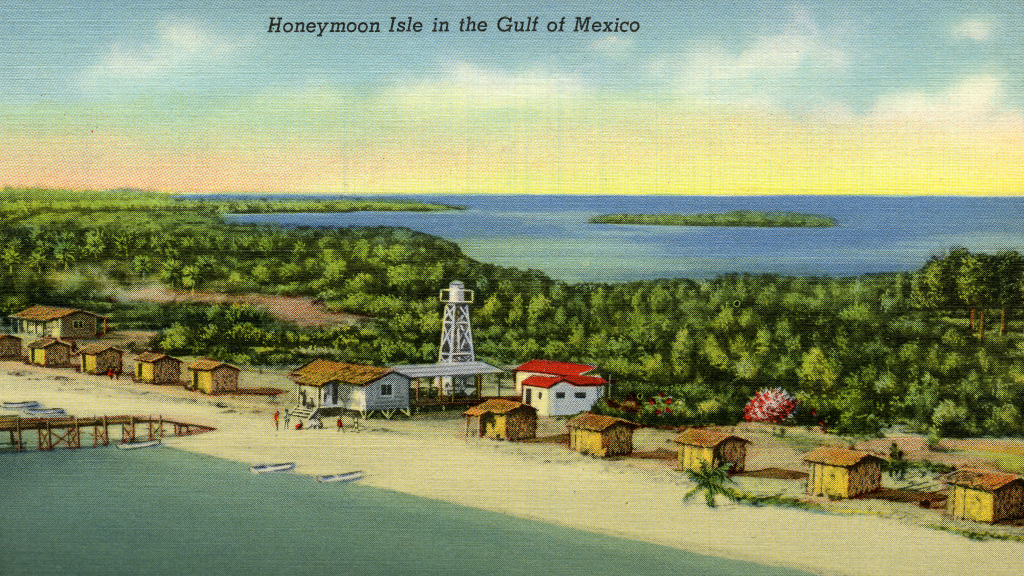
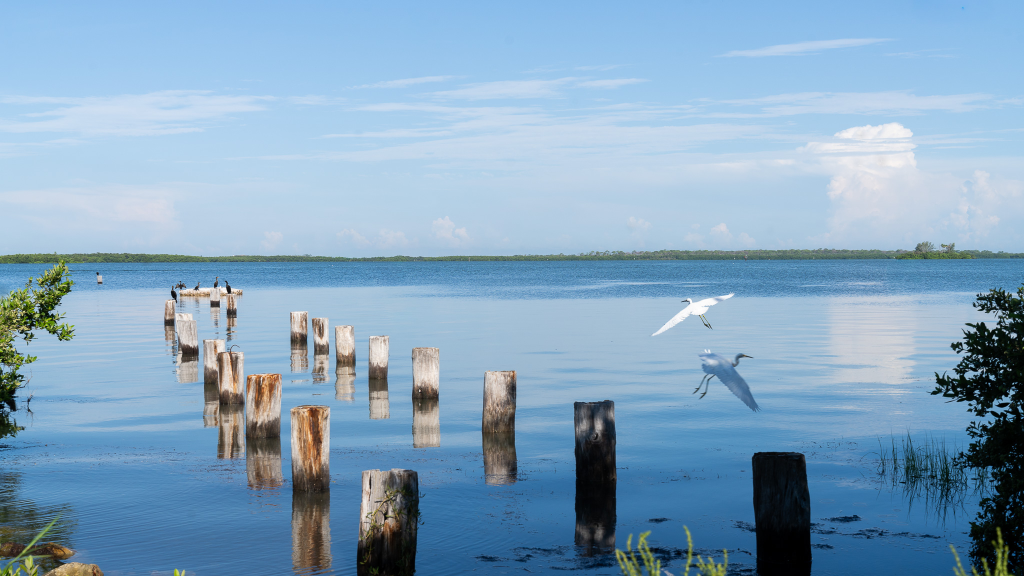
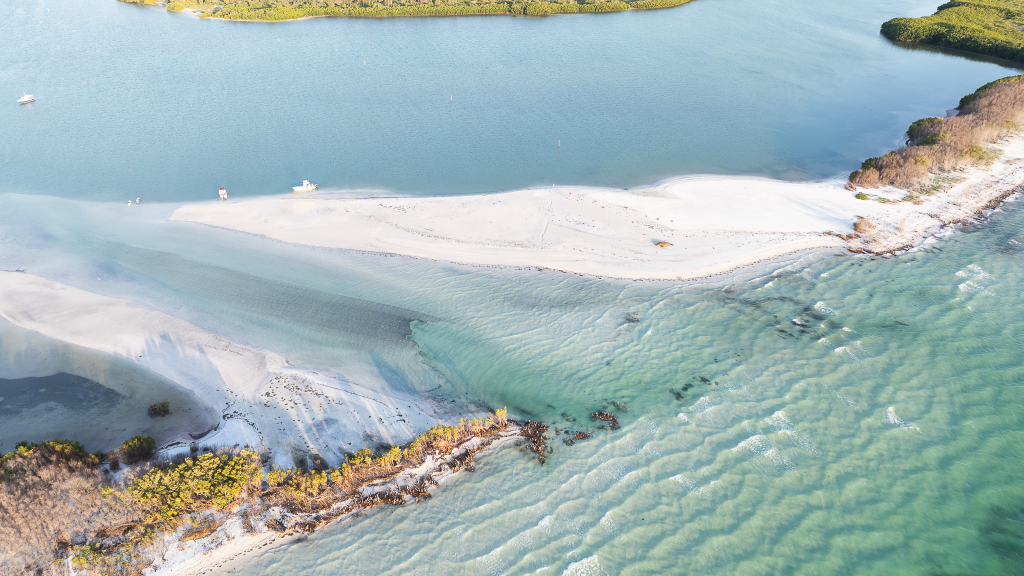
Many of these waterfront homes survive today, though their context has transformed. Hog Island, which the Hurricane of 1921 split into the two separate islands now known as Caladesi Island and Honeymoon Island, no longer presents the unbroken horizon line that the original Victoria Drive residents would have seen. The schooner trade has been gone for a century. The dock has been replaced and reconfigured. But the homes themselves — those that survived the hurricanes, the development pressures, and the architectural fashions of the intervening decades — remain a continuing physical record of the era when Dunedin was a working seaport rather than a tourism destination.
Andrews Memorial Chapel and the Religious Heritage
In 1888, the small congregation that had formed around the early ministry of Reverend Joseph Brown — who had reportedly preached his first Dunedin sermon directly at the dock the Friday after his arrival — completed construction of the Andrews Memorial Chapel. The chapel was built on land donated adjacent to the Dunedin Cemetery, and it represents one of the earliest surviving structures of any kind in the original Dunedin community.
The chapel’s architectural character reflects the late-nineteenth-century rural church tradition of the American South: modest scale, rectangular plan, gabled roof, simple but dignified detailing, and the kind of carpenter-Gothic restraint that characterized small denominational chapels across the period. Its construction predates the formal incorporation of the town by more than a decade.
The chapel was carefully relocated in 1971 to its current site at the Pioneer Park / Dunedin History Museum campus, where it remains open to the public for tours, weddings, and other community uses. Its preservation across more than 135 years of continuous existence — through multiple ownership transitions, two relocations, hurricanes, economic cycles, and the steady pressure of modern development — represents a small civic miracle and a continuing testament to Dunedin’s deep commitment to preserving the physical fabric of its earliest history.
For anyone wanting to understand the Dunedin of the founding era, Andrews Memorial Chapel is the single most accessible direct connection available. Standing inside it, looking at original construction details that have been carefully preserved, is one of the closest experiences a present-day visitor can have to the architectural sensibilities of the town’s earliest residents.
The Architectural Inventory of Historic Dunedin
The historic residential core of Dunedin, concentrated within roughly the same square mile that constituted the original platted town, contains a genuinely distinguished collection of late-nineteenth and early-twentieth-century homes. The architectural styles present include:
Folk Victorian and Queen Anne homes from the 1880s and 1890s represent the earliest stratum of surviving residential architecture. These homes — typically two or two-and-a-half stories, frame construction, with steep gabled roofs, decorative trim work (“gingerbread”), wraparound or front-gabled porches, and the asymmetrical massing that defined late-Victorian residential design — were built for the merchant families, sea captains, and citrus growers who anchored the early town’s economic life. Surviving examples are concentrated along Victoria Drive, Scotland Street, and the original platted streets nearest the harbor. They are among the rarest historic residential inventory in Tampa Bay, simply because so much architecture from this period has been lost across the past century to hurricanes, development, and the cumulative pressures of time.
Florida Vernacular cottages from the same era through the early 1900s form a second stratum of historic housing. These were the homes built by and for the broader population of working residents — carpenters, citrus laborers, merchant clerks, dock workers, and the everyday people who actually staffed the town’s working economy. Florida Vernacular construction is characterized by frame construction with simple wood siding (often drop siding or board-and-batten), tin or metal roofs, deep shaded porches designed for cross-ventilation, raised foundations on piers (allowing airflow beneath the home and providing modest flood resilience), and an honest functional aesthetic that reflects the climate and materials available to early Florida builders. Many Florida Vernacular cottages have been expanded or modified over decades, creating layered additions that themselves tell the story of how the home evolved with successive owners.
Craftsman bungalows appeared in Dunedin during the 1910s and 1920s, reflecting the dominant national residential style of the era. These homes — characterized by low-pitched gabled roofs with wide overhanging eaves, exposed rafter tails, decorative brackets (“knee braces”) in the gables, tapered wood or stone columns on porches, deep front porches with substantial use of original wood, and interior hallmarks including built-in cabinetry, original longleaf pine flooring, and masonry fireplaces — became the middle-class residential staple in Dunedin as the town’s population grew through the 1920s. Concentrated bungalow inventory survives throughout the historic core, particularly in the residential blocks immediately surrounding the downtown commercial district.
Mediterranean Revival and Spanish Colonial Revival homes from the 1920s reflect the influence of the Florida Land Boom on Dunedin’s residential architecture. While Dunedin did not experience the boom-era construction at the scale of larger Tampa Bay markets like Davis Islands, Snell Isle, or Hyde Park, several substantial Mediterranean Revival residences were built during the 1920s, with concentrations along the older waterfront streets. These homes — featuring red barrel tile roofs, stucco exteriors, arched doorways and windows, decorative tile work, ornamental wrought iron, and the characteristic asymmetrical massing of the style — remain among the most architecturally significant inventory in the town’s historic core today.
Colonial Revival homes appear throughout the historic district, reflecting the early-twentieth-century American architectural revival that drew on Atlantic Seaboard colonial and Federal-era precedents. With their symmetrical facades, classical detailing, and traditional interior layouts, these homes appeal to buyers drawn to formal architectural vocabulary and have proven particularly resilient across market cycles.
Mission Revival and early modernist homes are scattered through the inventory in smaller numbers, with some particularly fine examples in specific blocks. The Mission Revival style — characterized by smooth stucco walls, rounded parapets and bell-shaped gables, and the specifically Spanish-mission architectural references — is rarer than Mediterranean Revival but provides important counterpoint within the historic landscape.
Early Florida coastal cottages and bungalow-cottages from the 1900s and 1910s represent some of the most distinctively Floridian residential architecture in Dunedin. Smaller in scale than the Folk Victorian homes of the 1880s and 1890s but more architecturally ambitious than the simplest vernacular construction, these homes typically combine raised foundations, deep porches, decorative woodwork that responded to the Florida climate (vented gables, generous overhangs, large multi-pane windows for cross-ventilation), and the architectural restraint that characterized small-town Florida construction before the boom-era introduction of more theatrical styles.
The cumulative effect of walking the Dunedin historic core is that of encountering architectural variety preserved at scale. Within a few blocks, a careful observer can encounter homes from the 1880s, 1890s, 1900s, 1910s, 1920s, and 1930s, each reflecting the specific moment of its construction, all coexisting in a streetscape that has been maintained rather than replaced. This is what historic preservation, sustained across 140 years, actually produces.
The Preservation Framework
Dunedin’s commitment to preserving its historic architectural fabric is supported by a substantive municipal framework that distinguishes the town from many of its Florida peers.
The City of Dunedin maintains a formal Historic Preservation Ordinance that provides for review of significant modifications to designated historic properties, supports the local historic landmark designation process, and establishes the legal infrastructure for protecting the town’s most architecturally significant inventory. Several Dunedin properties are listed on the National Register of Historic Places, providing federal recognition and access to specific preservation resources. Many additional properties carry local historic designation, providing protection at the municipal level even where federal recognition has not been pursued.
The town has also been recognized through the federal Preserve America program, an Advisory Council on Historic Preservation initiative that identifies communities demonstrating sustained commitment to preserving and celebrating their historic resources. This designation, awarded to a relatively small number of American communities, reflects the substantive nature of Dunedin’s preservation infrastructure rather than mere aspirational commitment.
For owners and prospective buyers of historic Dunedin homes, the preservation framework matters in practical ways. Significant exterior modifications to designated properties typically require review and approval through municipal processes. Original architectural features carry both preservation value and, often, market value premiums. Renovations that respect a home’s original architectural character generally face smoother approval processes than those that propose substantial modifications. Buyers who understand the framework before purchasing make better decisions than buyers who discover the framework after closing.
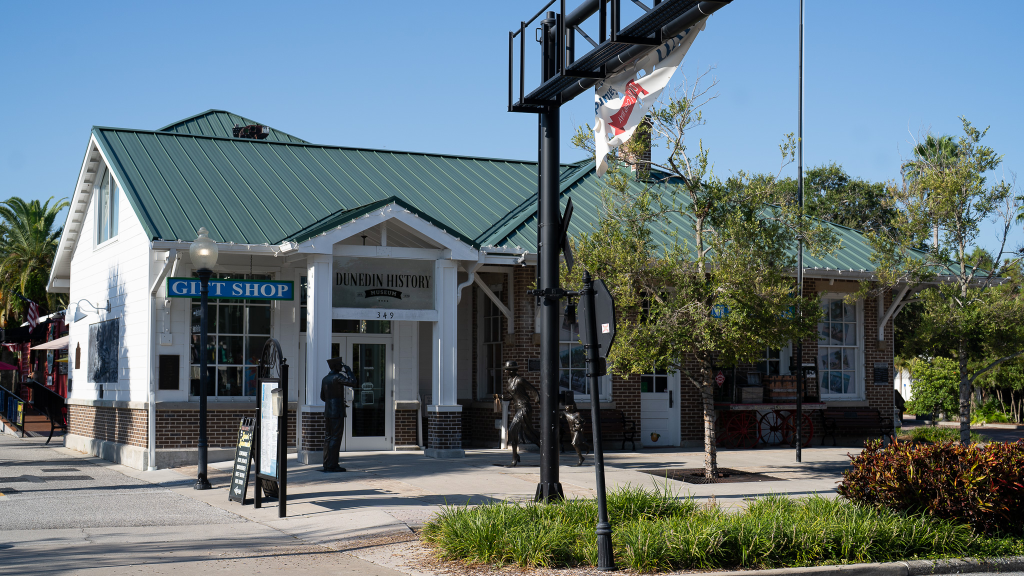
The Dunedin History Museum, housed in the historic 1924 Atlantic Coast Line Train Depot at 349 Main Street, serves as the institutional anchor for the town’s preservation work. The museum maintains research archives, organizes self-guided historic walking tours, hosts educational programming about the town’s history, and provides resources for owners researching the history of specific properties. The museum’s preservation of the original 1888 Andrews Memorial Chapel, as discussed earlier, represents one of the most important continuing preservation efforts in the town’s history.
I serve on the museum’s Board of Directors, which gives me both a privileged perspective on the institutional preservation work being done in Dunedin and a direct stake in its continued success. The work being done by the museum and the broader preservation community in Dunedin is genuinely substantive, and it represents one of the qualities that distinguishes the town from communities where historic preservation has become a hollow marketing claim.
The Investment Case for Dunedin Historic Homes
For buyers evaluating Dunedin historic homes as investments in addition to lifestyle choices, the case rests on several specific fundamentals.
Architectural irreplaceability. The 1880s and 1890s Folk Victorian and early frame vernacular homes that survive in Dunedin cannot be reproduced at any contemporary cost. Old-growth heart pine framing, original cypress siding, original windows, original detailing — these materials and methods are essentially unavailable today. The homes that retain meaningful original character represent assets that cannot be manufactured, which produces the kind of pricing durability that newer construction cannot replicate.
Limited supply. The original Dunedin historic core contains a fixed inventory of historic homes within geographic boundaries that cannot expand. As development pressure has continued across recent decades, the surviving historic inventory has only become rarer. New construction within the historic core occurs occasionally on lots where earlier homes have been lost, but the cumulative inventory of pre-1940 homes in Dunedin can only decrease, never increase.
Location permanence. The qualities that draw buyers to Dunedin — walkable downtown, Scottish heritage, Pinellas Trail access, marina and beach proximity, the small-town civic character — are all features of the town’s specific geographic and cultural position that cannot be replicated elsewhere. A historic home in Dunedin sits within a context that the broader Tampa Bay market cannot offer in equivalent form.
Post-Helene resilience. The September 2024 Hurricane Helene meaningfully transformed the Tampa Bay residential market. Coastal and lower-lying neighborhoods experienced substantial flooding and have seen post-storm pricing pressure, while inland and elevated neighborhoods have seen pricing strength. Dunedin’s historic core, while geographically near the Gulf, includes substantial inventory in elevated positions and outside the highest-risk flood zones. Specific properties vary, and any individual purchase requires specific due diligence on flood zone status and elevation, but the broader town has held value better than many comparable Florida coastal markets through the post-Helene period.
Ongoing appreciation in walkable historic neighborhoods nationally. The broader market trend toward walkable, traditional, character-rich neighborhoods has supported sustained appreciation in well-maintained historic districts across the United States. Dunedin’s combination of authentic historic fabric, walkable downtown, natural amenities, and active civic culture positions it within this broader trend rather than against it.
For buyers who can identify the right property — a contributing historic home with preserved architectural character, a specific block-level location that aligns with long-term value patterns, documented elevation and flood zone status, and the kind of condition that supports rather than complicates ownership — the investment case for Dunedin historic homes is strong. As with any historic neighborhood market, the wrong property purchased without specialized understanding of what actually drives value can underperform; the right property purchased with informed representation can deliver outcomes that comparable mid-tier construction in newer subdivisions simply cannot match.
Renovation and Stewardship
Owning a historic home in Dunedin involves the same general considerations that apply to historic home ownership anywhere — and several considerations specific to this particular town.
The general considerations are substantial. Historic homes require more cyclical maintenance than newer construction. Original wood windows need restoration rather than replacement to preserve architectural value. Original wood floors and millwork represent assets that generic renovation can damage. Specialized contractors with documented experience in historic Florida homes are limited in supply, particularly in markets where historic inventory is concentrated. Insurance considerations have become genuinely complex for older Florida homes. I have written at length about these general considerations in earlier Journal posts, including the comprehensive guide to renovating a historic home without losing its character and the detailed guide to historic window restoration vs. replacement.
The Dunedin-specific considerations include working effectively within the town’s historic preservation framework, identifying the local craftsmen and specialists who actually understand 1880s through 1920s Florida construction, and understanding which architectural features in your specific home represent genuine preservation value (as opposed to features that may be original but are not architecturally significant). The Dunedin History Museum and the local preservation community can be substantial resources here, both for research on specific properties and for referrals to qualified professionals.
For stewards of Dunedin historic homes — current owners, future owners, and the cumulative chain of owners who have maintained these properties across the decades — the work is genuinely meaningful. Each owner who maintains a historic Dunedin home thoughtfully extends the architectural inventory of the town for the next generation of owners. Each owner who allows a historic home to be lost — to demolition, to inappropriate renovation, to the gradual erasure of original character through cumulative small modifications — diminishes what subsequent generations will inherit.
This is not abstract philosophy. It is the practical reality of how Dunedin’s historic core has survived, and how it will or will not continue to survive in the decades ahead.
Why I Wrote This Piece
I want to close with a note about why this Journal entry exists.
I have lived in Dunedin since 2013. My professional practice has increasingly concentrated on historic and character homes across Tampa Bay, with Dunedin representing one of the markets I know most deeply. I serve on the Board of Directors of the Dunedin History Museum because I believe the institutional work of preserving the town’s history is genuinely consequential and worth contributing to. I produced a documentary film about Dunedin some time ago because I wanted to capture visually what makes the town distinctive — that documentary is available on YouTube here for readers who want to encounter the town through film rather than only through text.
I recently published a longer argument on LinkedIn making the case that Dunedin is one of the best small towns in the United States. That argument is broader than this Journal entry. This piece is the architectural and historical companion — the depth of detail on what specifically defines Dunedin’s historic residential fabric, intended for readers who want to understand the historic homes themselves rather than only the broader case for the town.
The reason all of this work matters, in my view, is straightforward. Dunedin is genuinely one of the most distinctive small Gulf coast towns in Florida. Its historic homes are a meaningful part of what makes it distinctive. Buyers and owners and stewards of these homes participate in the continuing work of maintaining what previous generations built. And the more people who understand what Dunedin’s historic homes actually are — what they were built to be, what they represent, what they require — the more likely it is that the next generation of owners will steward them as thoughtfully as the best of the previous generations have.
This Journal entry, like the documentary, like the LinkedIn argument, like the work I do every week with clients buying and selling homes in this town, is part of that broader effort.
Considering a Historic Dunedin Home?
Whether you are exploring Dunedin specifically, comparing it against other Tampa Bay historic neighborhoods, preparing to sell a historic home within its boundaries, or simply researching the town before narrowing your search — I would welcome the conversation. Every historic home purchase is specific. The right approach depends on the home, your goals, your timeline, and what you are actually trying to accomplish.
For the broader argument about why Dunedin matters as a town, you can read my LinkedIn article on why Dunedin is one of the best small towns in the United States. For the visual record of what the town actually looks like, my Dunedin documentary is available on YouTube.
Call 727-871-SOLD (727-871-7653) or reach out through the Contact page to start the conversation.