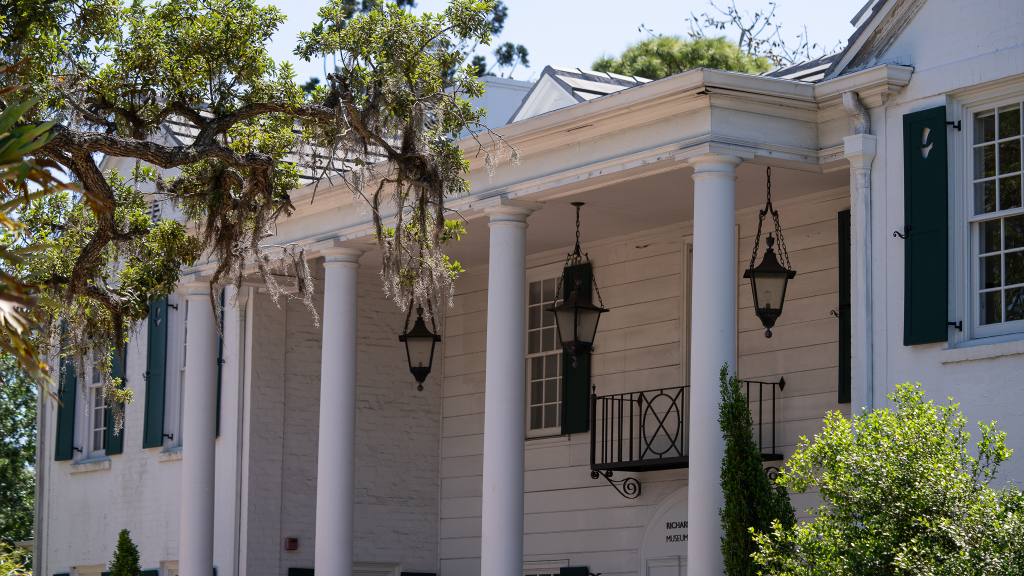
Christy Payne built his dream home during the Great Depression.
Nearly a century later, it still stops visitors in their tracks.
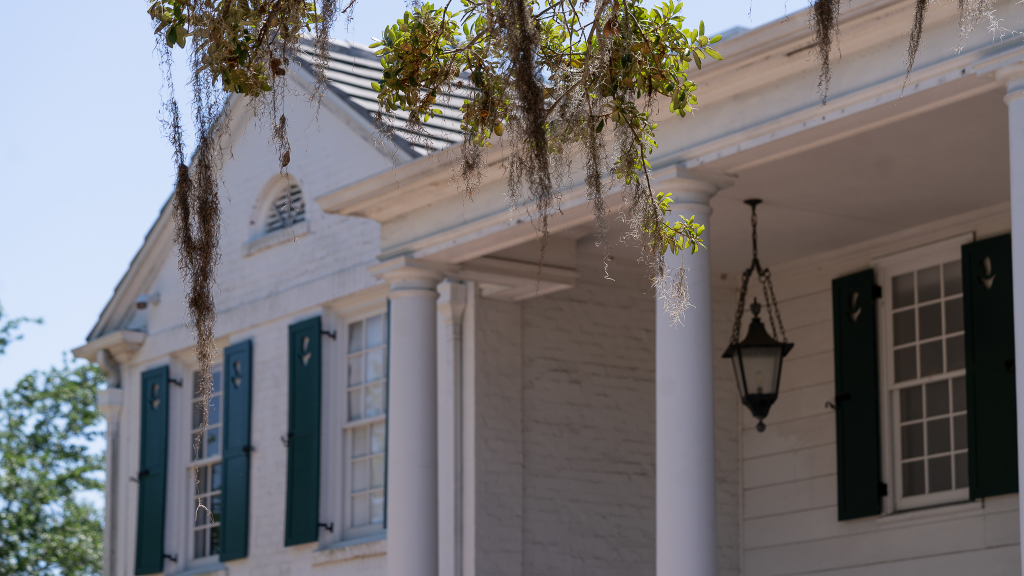
There’s a moment, just after you clear the tropical conservatory and round the bend past the butterfly garden, when it appears — a stately white colonial revival rising against a canopy of 90-year-old laurel oaks, looking for all the world like it was airlifted from the Pennsylvania countryside and quietly settled into the Florida coast. That’s the Payne Mansion, and once you see it, you don’t soon forget it.
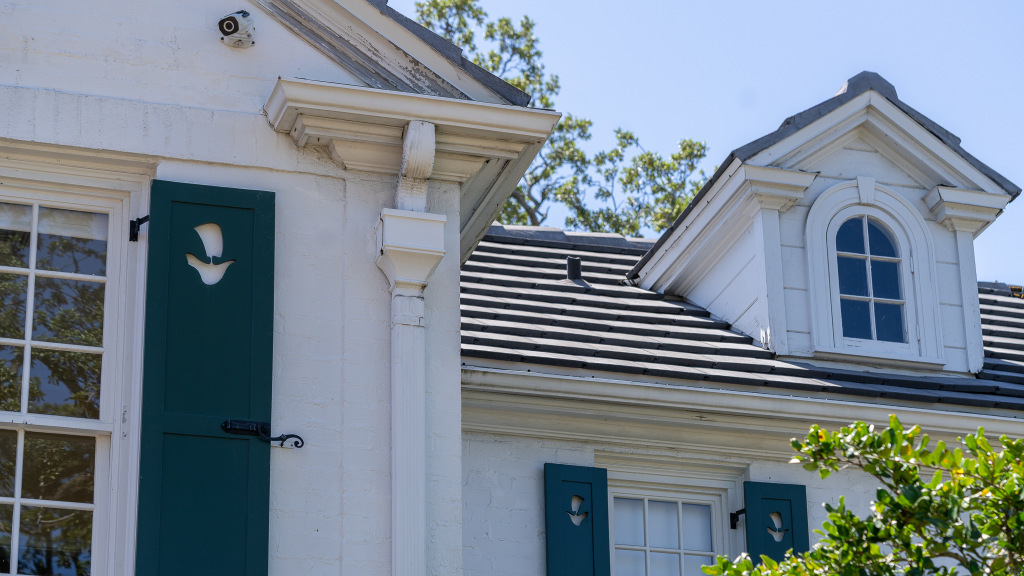
I had that moment yesterday. Camera in hand, wandering the 15-acre bayfront grounds of Marie Selby Botanical Gardens in downtown Sarasota, I found myself drawn toward the mansion the way photographers always are — by the interplay of light on a white facade, by the geometry of six chimneys against a Florida sky, by a building that simply radiates story.
“He collected pictures of great homes and decided that a house in Sewickley, Pennsylvania would be his inspiration — then built it in paradise.”
A retirement home built during the Depression
The story begins with Christy Payne — the son of Calvin M. Payne, one of John D. Rockefeller Sr.’s closest business associates and a principal architect of Standard Oil of New Jersey. Christy followed his father into the oil business, rising to become director and eventually treasurer of Standard Oil before retiring in 1935. He had wintered in Sarasota as a child, and the city had never left him.
In 1934, with the country deep in the Great Depression, Payne purchased an overgrown acre at the corner of Mound Street and Palm Avenue. He hired Sarasota contractor Paul Bergman, engaged architect A.C. Price, and set about building the home he’d always imagined. The total cost: over $50,000 — an extraordinary sum for that era, and a testament to the depth of Payne’s vision.
1934 Construction began $50K Original build cost 6 Fireplaces & bathrooms
The design was modeled on the Franklin Jones House in Sewickley, Pennsylvania — a colonial revival Payne had admired from a photograph. The exterior bricks were cement-washed to achieve an intentionally “antique” appearance. The foundation was reinforced with steel railroad tracks, engineering the home to withstand Florida’s fiercest storms. The downstairs floor was poured as flood-resistant terrazzo. And in a detail decades ahead of its time, Payne installed a rooftop solar heating system rather than a conventional gas or electric water heater.
It was also, notably, the first home in Sarasota to feature pull-down attic stairs — a practical flourish that says a great deal about the man who built it.

The plants that outlived their planter
Christy and his wife Anne moved into the finished home on August 21, 1935. They were intentional gardeners — insisting that the plantings surrounding the house be native to the region. The Japanese yews they placed on either side of the front door have since grown to reach the roofline. Many of the laurel oaks they planted still stand, now massive and shade-giving, threading their roots through nearly a century of Sarasota history.
Anne passed away in 1955. Christy lived on in the mansion alone, in the home he had spent decades imagining, until he died at 88 in 1962. The house had been everything he wanted it to be.
From private dream to public treasure
In 1973, the William and Marie Selby Foundation purchased the Payne Mansion and incorporated it into what would become Marie Selby Botanical Gardens. When the Gardens opened to the public on July 7, 1975, the mansion became the home of the Museum of Botany & the Arts — a role it holds to this day, hosting rotating exhibitions by artists ranging from Andy Warhol to Paul Gauguin. In 1998, the mansion was listed on the National Register of Historic Places.
Standing in the butterfly garden in front of the mansion yesterday, I thought about what it means for a home to outlast its owner by nearly 90 years — and to do so not as a relic, but as a living, visited, loved place. The white walls have held their composure through everything. The oaks have thickened. The Japanese yews have climbed past the windows. And the people keep coming.
What this means for historic home buyers
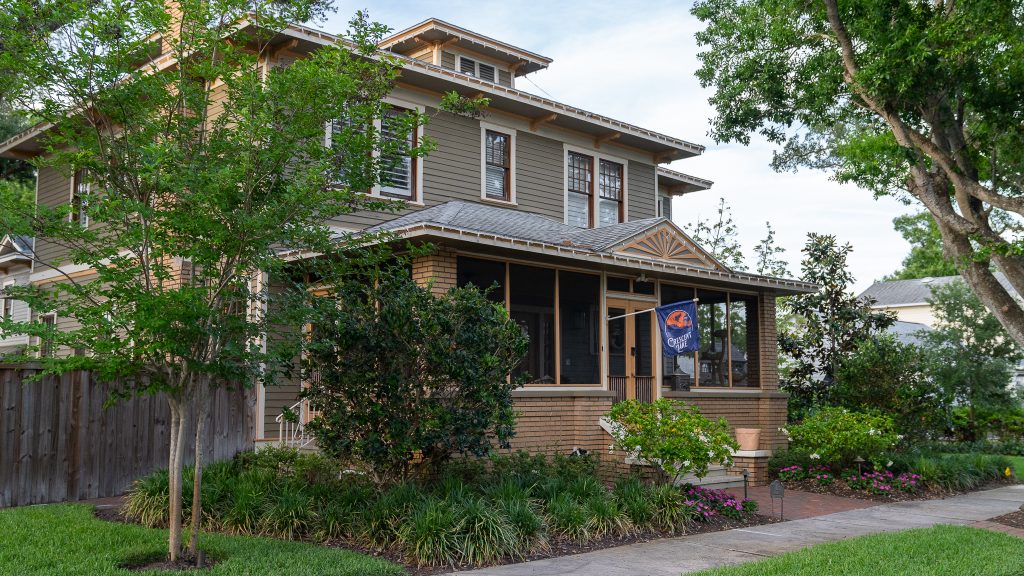
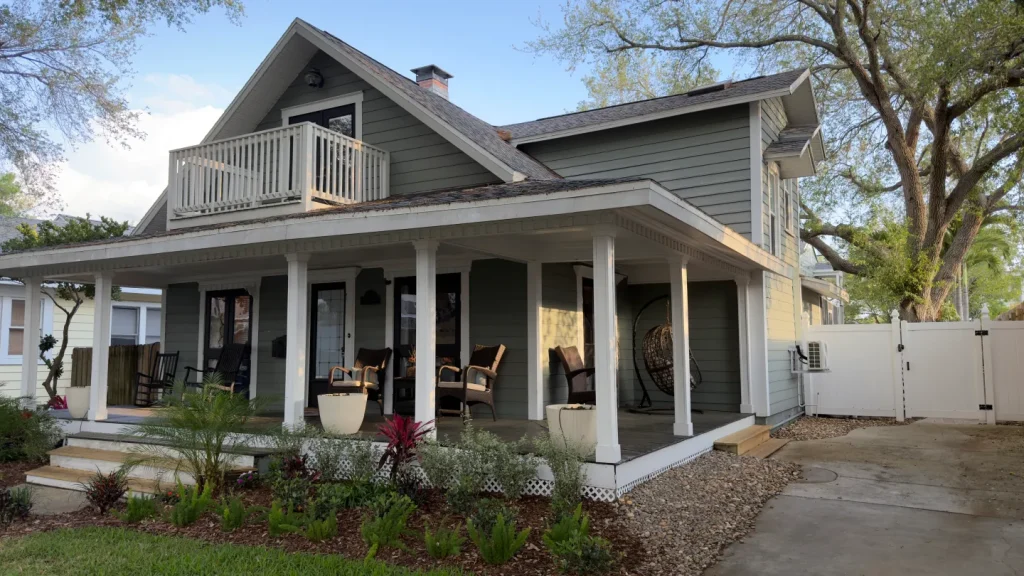
Florida is full of stories like this one — homes built with uncommon intention, by people who chose this coast for a reason, and whose choices shaped neighborhoods that outlast them. Whether it’s a 1920s Craftsman in Dunedin, a mid-century bungalow in Seminole Heights, or a pre-war colonial on the waterfront, historic homes carry something that new construction simply can’t replicate: character accumulated through time.
As a real estate professional working across the Tampa Bay area, I find myself drawn to these homes for the same reason I was drawn to my camera yesterday: there’s always more to see the longer you look. If you’re searching for a home that has that quality — one that rewards slow attention and tells a story worth being part of — I’d love to help you find it.
Middleton Tampa Bay · Compass
Searching for a home with history?

From Dunedin to Hyde Park to historic St. Petersburg, I specialize in helping buyers find homes that are worth falling in love with. Let’s talk.