
A note before I begin. This Journal usually covers historic homes. Crescent Lake Park is not a home. It is a park. But it is also one of the most historically significant pieces of public ground in St. Petersburg, and the neighborhood that grew up around it cannot be separated from it. The water tower above the field has stood since the 1920s. The baseball diamond hosted the New York Yankees during their long St. Petersburg spring training years. Some of the men who built early Tampa Bay lived on the streets that run down to its edges. To write about the historic homes of Crescent Lake without writing about the park itself would be to miss what the neighborhood actually is.
So this piece sits on the Journal as an exception that explains itself.
What the Park Actually Is
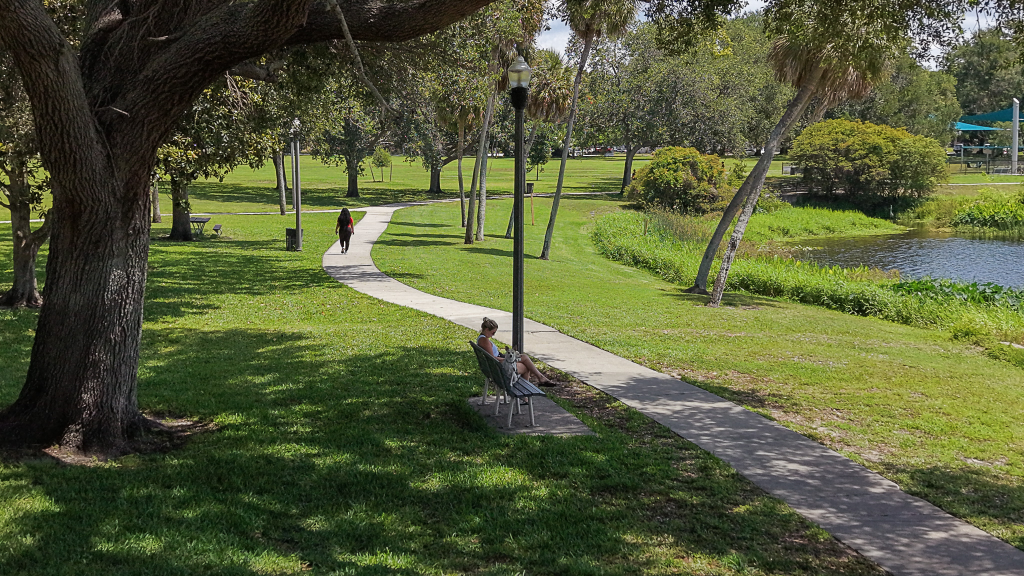
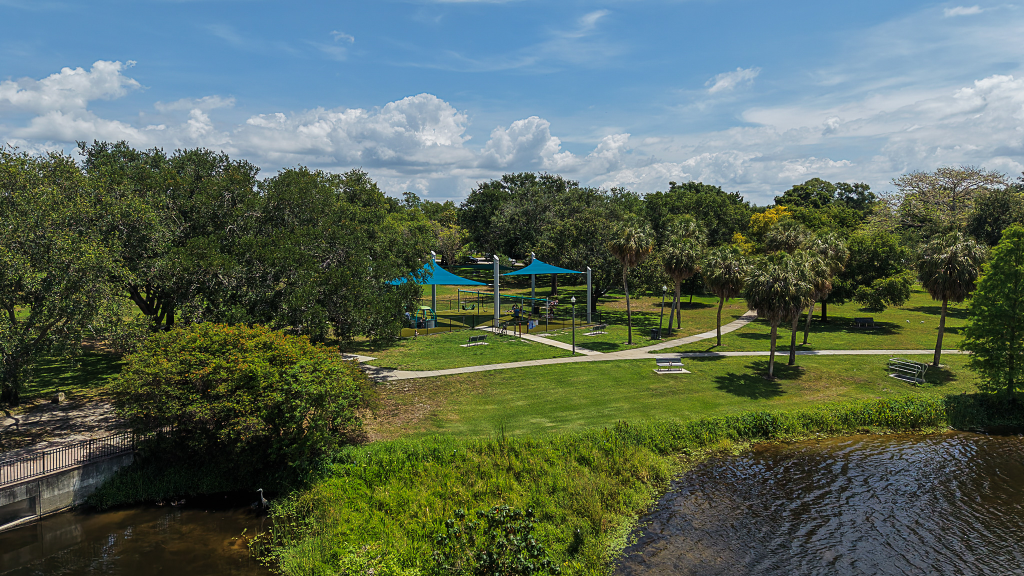
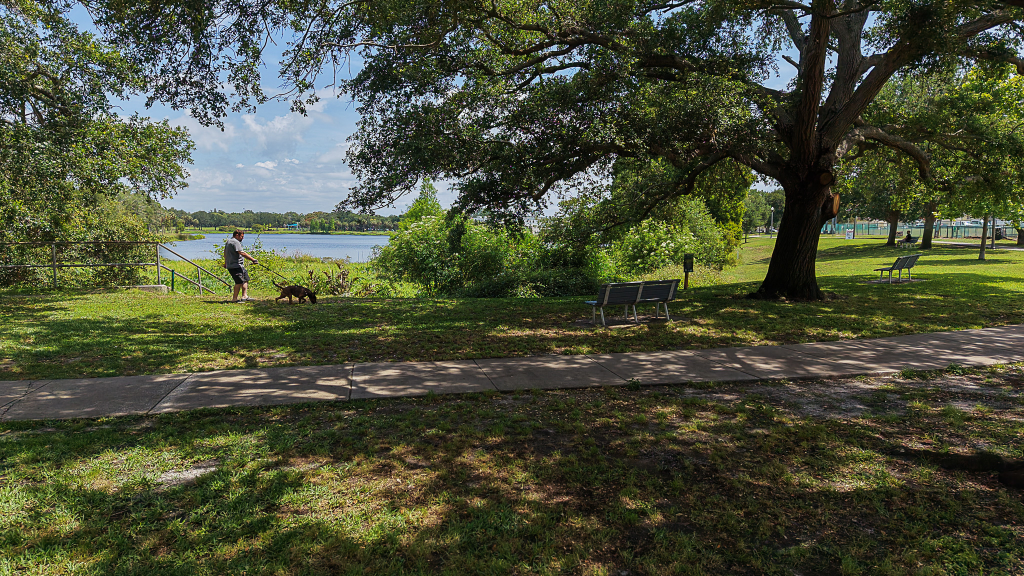
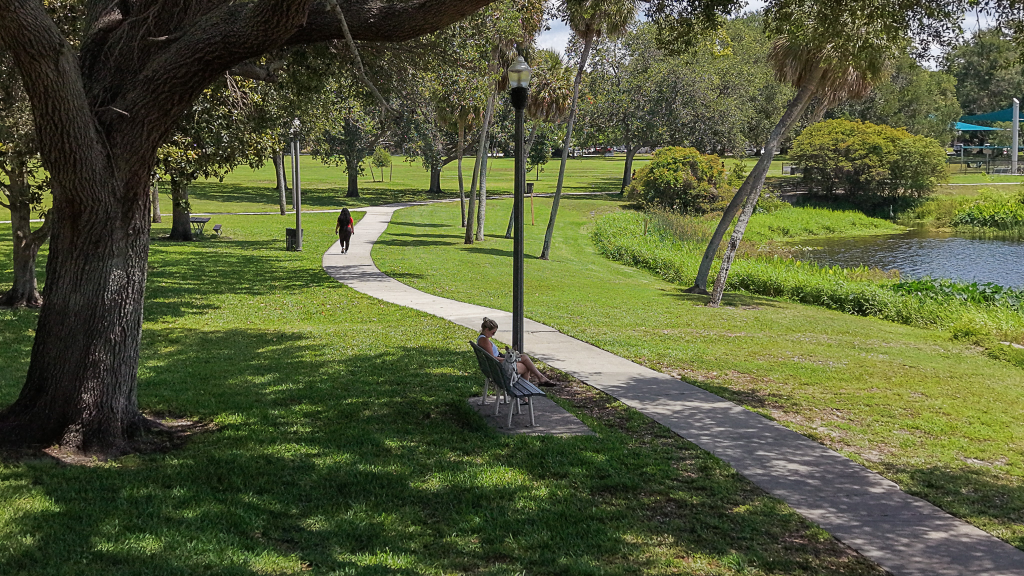
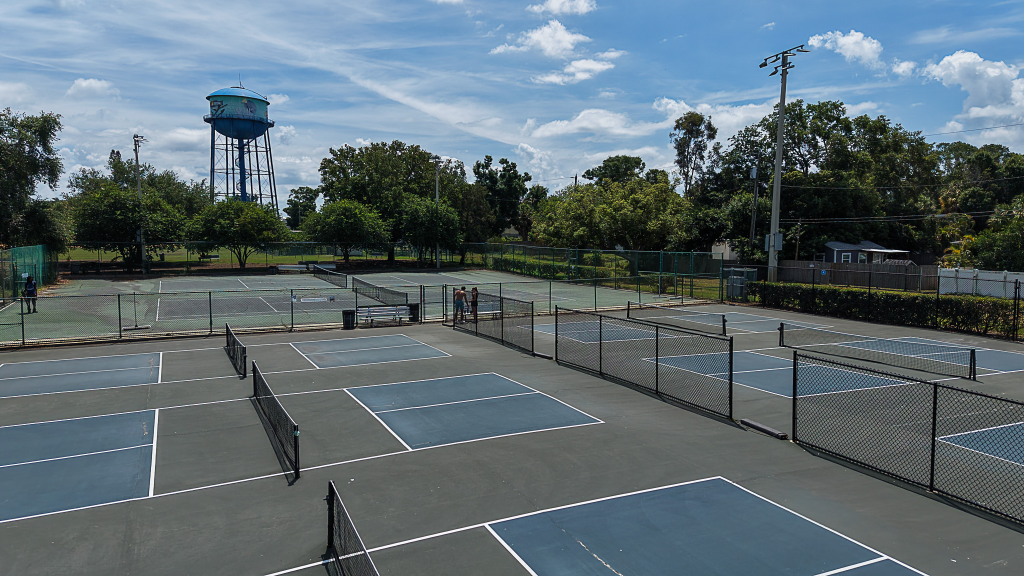
Crescent Lake Park covers about fifty-eight acres in the middle of central St. Petersburg, a few blocks north of downtown and a few blocks west of Old Northeast. The lake itself sits in the middle of it. A walking path circles the water at a little under a mile. There are baseball fields, tennis courts, pickleball courts, a playground, a youth center, and benches scattered along the path under live oaks that were planted decades ago and have grown into the canopy you see now.
I have been to this park more times than I can count. Mornings when the light comes off the water and the early walkers are out. Afternoons when the youth leagues have the diamond going and the bleachers are full. Evenings when the joggers have replaced the dog walkers and the pickleball courts are still going under the lights. Every time I go, the park is bustling. Whatever I am doing in Tampa Bay real estate that week, whoever I am driving around looking at houses, the park seems to be holding the same steady rhythm of a neighborhood that uses what it has.
That is rarer than people realize. Most American urban parks are either underused or overrun. Crescent Lake is neither. It is occupied at the human scale, by the people who live within walking distance of it, every day of the year.
The Water Tower
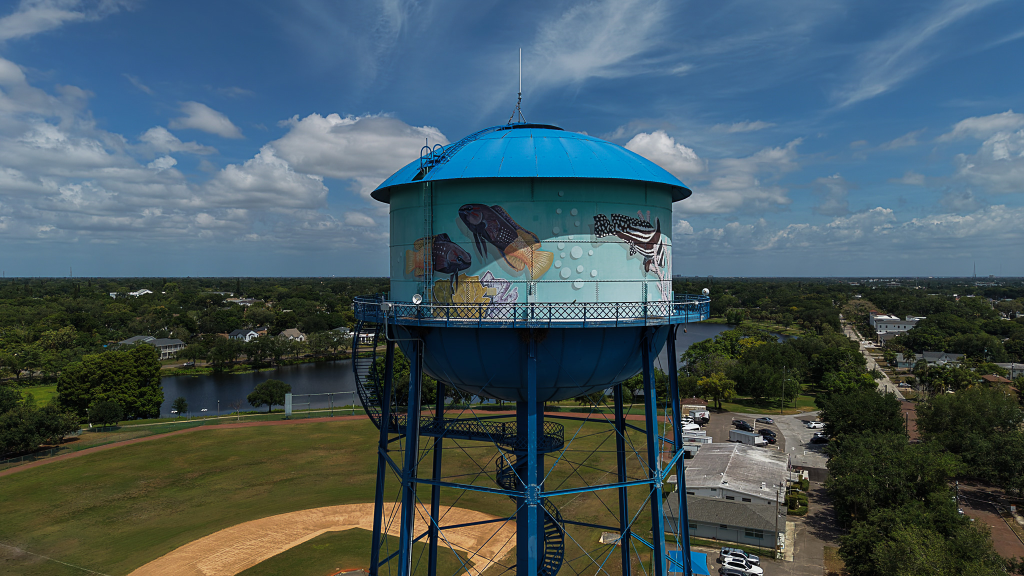
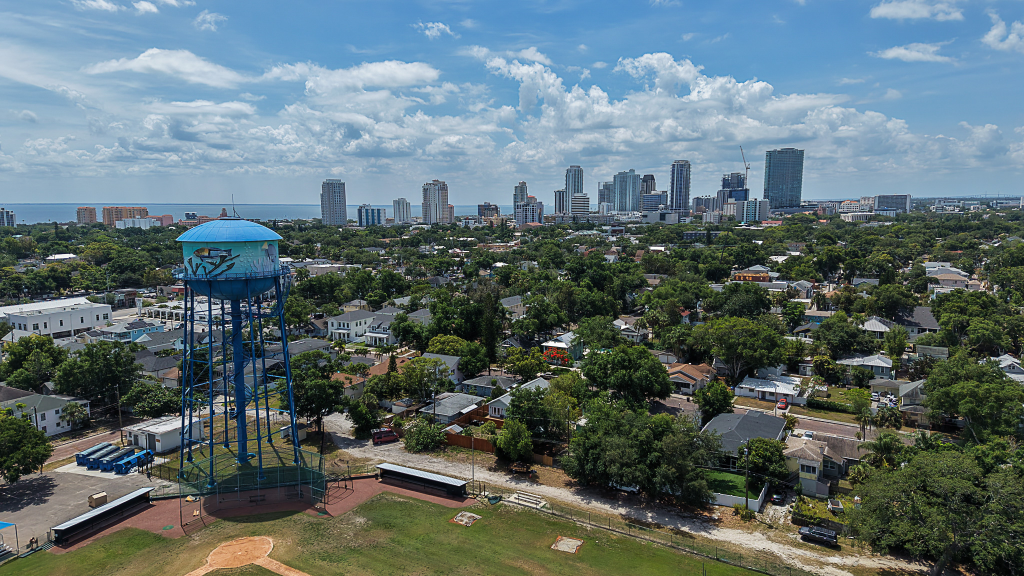
The first thing most people notice in Crescent Lake Park is the water tower. It sits above the southern end of the field, and it has been there for over a hundred years. The structure dates to the 1920s, when St. Petersburg was building out the public infrastructure that would carry the city through the next century. It is one of the oldest surviving water towers in the city, and it remains the visual landmark of the entire neighborhood. You can see it from blocks away. You can see it from inside the park from anywhere on the path. It is part of the skyline of central St. Petersburg in a way that the newer downtown towers will never be, because it has been there longer than any person currently living in the neighborhood.
In recent years a local artist painted the tower with a saltwater aquarium scene, and the result is one of the more genuinely beloved pieces of public art in St. Petersburg. Most cities have water towers. Crescent Lake has a hundred-year-old water tower painted to look like the bottom of the Gulf of Mexico. The combination of working civic infrastructure, deep history, and contemporary public art is the kind of thing that explains why people fall in love with this neighborhood and stay.
The Yankees
Between 1925 and 1961, the New York Yankees held spring training in St. Petersburg, and one of the fields they used sat at Crescent Lake Park. The roster of players who worked on the diamond reads like a museum of twentieth-century baseball. Babe Ruth in his last seasons. Lou Gehrig before his decline. Joe DiMaggio when he was new. Mickey Mantle when he was young. Yogi Berra. Whitey Ford. The full Yankees machine of that period rotated through this small St. Petersburg field every February and March for thirty-six consecutive years.
Most American baseball cities lose this kind of history to redevelopment. The fields get sold. The names change. The plaques disappear. Crescent Lake still has its baseball diamond, and the diamond still has games on it most weekends. The youth leagues and adult intramural leagues that play there now do not always know what came before them, but they are playing on the same ground that hosted some of the most consequential players in the history of the sport. That continuity is itself part of why the park matters.
I have written elsewhere about the specific home in the Old Northeast where Babe Ruth lived during the spring of 1935, his final major league season. The full architectural and historical treatment is on this Journal at The Babe Ruth House at 346 16th Avenue NE. The house and the field are a few blocks apart. Ruth would have walked between them. So would Gehrig. So would the others. The Crescent Lake neighborhood is one of the few places in America where you can still walk that geography in something close to its original form.
The Neighborhood Around the Park
The streets that surround the park are some of the most architecturally distinctive in St. Petersburg. Bungalows from the 1910s and 1920s. Mediterranean Revival homes from the boom years. The occasional Tudor and Colonial Revival. Brick streets in many sections, the originals laid down nearly a century ago. Mature live oaks lining the sidewalks. The whole thing maintained at a scale and quality that most American historic neighborhoods have lost.
George Gandy lived in this part of St. Petersburg. He is the man whose name is on the Gandy Bridge, the first bridge to connect St. Petersburg to Tampa across the bay, completed in 1924. He financed the bridge himself, paying about three million dollars at the time, and the bridge changed the economic geography of the entire region. Gandy was one of several civic and business leaders whose homes once stood in or near the Crescent Lake area. The neighborhood was not just where ordinary residents of early St. Petersburg lived. It was where the people who built the city lived too.
I have written more comprehensively about the Crescent Lake neighborhood itself in an earlier Journal piece, Crescent Lake, St. Petersburg: Inside One of Tampa Bay’s Most Coveted Historic Neighborhoods. That piece covers the homes, the architectural styles, the development history, and the broader market. This piece is about the park itself, which I think deserves its own treatment.
Daily Life Around the Lake
What I find myself thinking about most often when I am at Crescent Lake is how much of the park’s value lies in things that are easy to overlook. People reading books on benches. Lunch breaks under the trees. Old men playing chess. Young families using the playground. The man I see most weekends doing tai chi by the water. Dogs of every size and disposition meeting each other for the hundredth time. The youth baseball games that bring whole families out on Saturday mornings. The pickleball games that did not exist five years ago and now run from dawn until well after sunset.
This is what cities are supposed to provide. A place where ordinary daily life can happen at a human scale, in a beautiful setting, around water and under trees, free of charge, available to anyone who lives near enough to walk. Most American cities have lost this kind of public ground. St. Petersburg has kept it, in this specific neighborhood, because earlier generations built it and the current generation has chosen to maintain it.
John Muir wrote in 1912 that everybody needs beauty as well as bread, that we need places to play in and pray in, where nature can heal and give strength to body and soul. He was writing about Yosemite. The principle applies to Crescent Lake. A small park in the middle of a working city is not Yosemite. But it does the same work for the people who live around it, and that work matters.
Why This Park Matters Now
I see the same families at the park year after year. I watch their kids grow up on the playground. I see the people walking the path most days, sometimes alone, sometimes together, sometimes with the same dog they had three years ago and sometimes with a new one. The park is the connective tissue of this neighborhood. It is where the people who live here actually meet each other.
When I drive buyers into Crescent Lake to look at homes, I always end up at the park before we look at any houses. Not because I am selling the park. Because the park is the reason most people who love Crescent Lake love it. The houses are beautiful, but the houses exist in many neighborhoods. The park is what makes this neighborhood specifically itself.
In a city that is changing as quickly as St. Petersburg is, that is not a small thing. New towers go up downtown every year. New developments rise on the edges of historic areas. The character of the city is being negotiated in real time. The places that hold their shape across this kind of change are the places that have something specific and irreplaceable at their center. Crescent Lake has the lake, the field, the tower, the trees, and the rhythm of a neighborhood using its park every day. As long as those things remain, this part of St. Petersburg will continue to be what it is, regardless of what is built around it.
A Closing Note
This Journal usually covers homes. I made an exception for this park because the park is the reason the homes around it have the value they have, and because the history of Crescent Lake belongs in the same kind of careful documentation that the homes themselves deserve. The water tower. The Yankees field. The streets where Gandy and others lived. The trees that shade the path. The ordinary daily life that makes the park work as a piece of public ground. All of it is part of what this neighborhood is, and all of it is what gets lost when nobody bothers to write it down.
For anyone who wants to understand St. Petersburg historic neighborhoods properly, Crescent Lake Park is one of the places to start.
Mark Middleton is a Realtor and Broker Associate at Compass, leading Middleton Tampa Bay. He has written extensively about the historic homes and neighborhoods of Tampa Bay’s Gulf coast, with a particular focus on the architectural and civic history that distinguishes specific places from generic luxury inventory. His earlier Journal piece on the Crescent Lake neighborhood is here, and his treatment of the Babe Ruth house in the adjacent Old Northeast is here.