From Cotton Fields and Citrus Groves to One of Tampa Bay’s Most Distinctive Communities
There are places that reveal themselves quickly.
Dunedin is not really one of them.
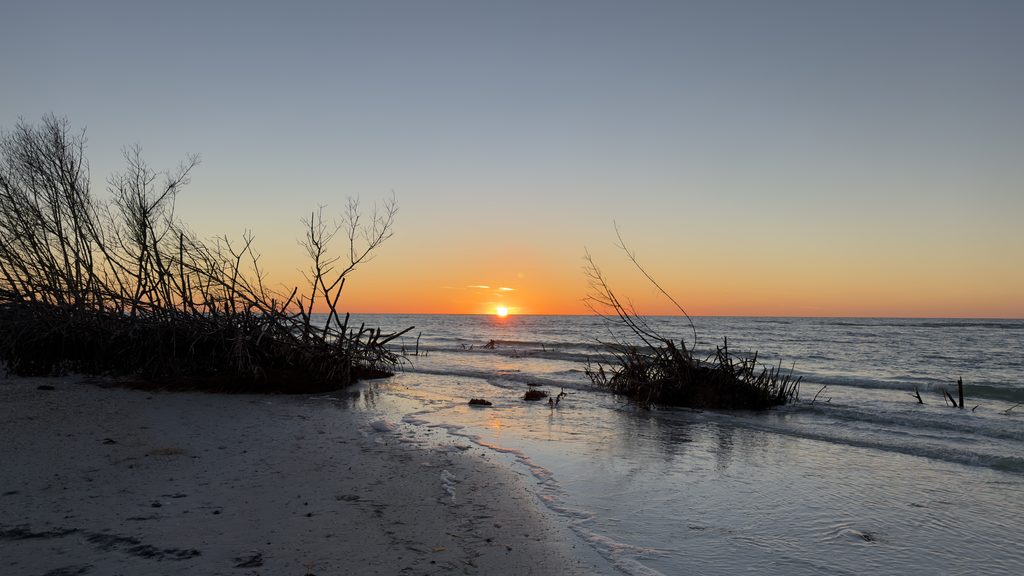
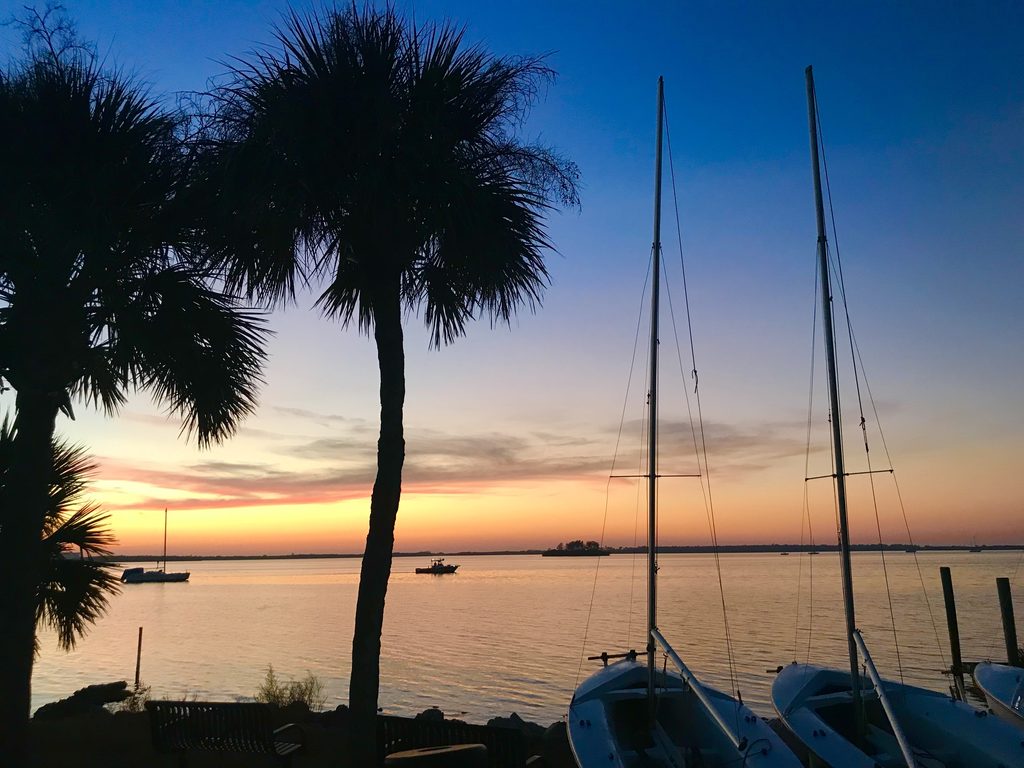
You can spend an afternoon downtown, walk the Pinellas Trail, have dinner near Main Street, watch the sunset over St. Joseph Sound, and leave thinking you understand the place.
Then you begin looking a little closer.
An old railroad depot sits beside the trail. A house on Scotland Street has been standing since the nineteenth century. The road to Honeymoon Island leads toward land that did not always look the way it does now. The Fenway Hotel rises above Edgewater Drive like something left behind by another era.
Even the name tells a story.
I have spent much of my life in the Tampa Bay area, and Dunedin is home for me today. I have also spent years photographing it, selling homes here, learning its neighborhoods, and trying to understand why people become so attached to this relatively small city.
The answer is not one thing.
It is the waterfront. It is the scale of downtown. It is the old houses and the streets beneath mature trees. It is the Scottish heritage that still appears in public life. It is baseball in the spring, the islands just offshore, the trail running through the middle of town, and the fact that Dunedin has managed to remain recognizable even as the rest of Tampa Bay has changed around it.
To understand why, it helps to go back to a time when much of downtown was not downtown at all.
Before Dunedin Had a Name
The first recorded land deed in what became Dunedin dates to 1852, when Richard L. Garrison acquired property in the area. Florida itself had become a state only seven years earlier. (dunedingov.com)
The landscape would have looked very different from what we know now.
The City of Dunedin’s own historical planning documents describe Native American activity, Cuban fishing outposts, and Spanish expeditions in the broader area before permanent settlement expanded during the nineteenth century. Early settlers included people arriving after the Civil War as well as immigrants from England and Scotland. (dunedingov.com)
Water mattered from the beginning.
A deep-water dock helped the small settlement develop into an active trading point. According to city records, Dunedin at one time had the largest fleet of sailing vessels in Florida. Schooners and sloops moved goods between the community and other Gulf Coast ports, helping connect a place that was still difficult to reach over land. (dunedingov.com)
That relationship with the water has never really gone away.
Today, we may think of the waterfront in terms of sunsets, walking, boating, and views from Edgewater Drive. In early Dunedin, the water was also transportation, commerce, and survival.
When Dunedin Was Jonesboro
In 1870, George L. Jones operated a general store in the settlement and reportedly placed the name Jonesboro above it.
The name did not last.
A few years later, Scottish merchants John O. Douglas and James Somerville became important figures in the young community. The city’s planning history says the two men established a post office and selected the name Dunedin, derived from the Gaelic name for Edinburgh, Scotland. By 1882, the name had become established for the town itself. (dunedingov.com)
That Scottish connection was not something added generations later for tourism.
It was part of the city’s identity near the beginning.
The influence is still visible today through the city seal, Highland games, pipe bands, street names, and Dunedin’s longstanding relationship with Stirling, Scotland. The cities have maintained a sister-city connection since the 1960s. (dunedingov.com)
For someone walking through Dunedin today, it can be easy to view those Scottish references as charming details.
They make more sense when you know where the name came from.
Downtown Dunedin Was Once a Cotton Field
This is one of my favorite pieces of Dunedin history because it is difficult to picture.
Much of what we now recognize as downtown was once agricultural land.
Cotton was an important early crop, particularly in the years following the Civil War. City historical records describe what is now downtown Dunedin as essentially a large cotton field before the arrival of the railroad. (dunedingov.com)
Eventually, citrus became more important.
By around 1880, orange groves were dominating the agricultural landscape. Citrus could be sold at greater profit, and improvements in transportation made it increasingly practical to ship fruit to buyers elsewhere.
One of the most important names in that story is L.B. Skinner.
Skinner arrived in Florida in the 1880s and purchased land for citrus production. His family became closely connected with Dunedin’s citrus industry and eventually with innovations in the machinery used to wash, grade, and package fruit.
The Skinner Machinery Company, incorporated in 1913, grew into a major manufacturer of citrus packing equipment. (dunedingov.com)
That industrial history matters because Dunedin was not simply a resort town waiting to be discovered by tourists.
People worked here.
They farmed, packed fruit, built boats, ran stores, shipped goods, and created businesses around the resources available to them.
The houses that remain from these periods are part of that working history.
The Orange Belt Railroad Changes Everything
In 1888, the railroad arrived.
The Orange Belt Railway connected Dunedin with a much larger transportation network running through Florida. Suddenly, the town had another way to move citrus, supplies, visitors, and residents.
The railroad helped create something we would recognize today as a proper downtown.
According to Dunedin’s Comprehensive Plan, the arrival of the depot along Main Street encouraged retail businesses, services, and housing to cluster around the station. (dunedingov.com)
The population was still tiny.
In 1898, Dunedin had an estimated population of only about 100 people. (dunedingov.com)
The town officially incorporated in 1899. (dunedingov.com)
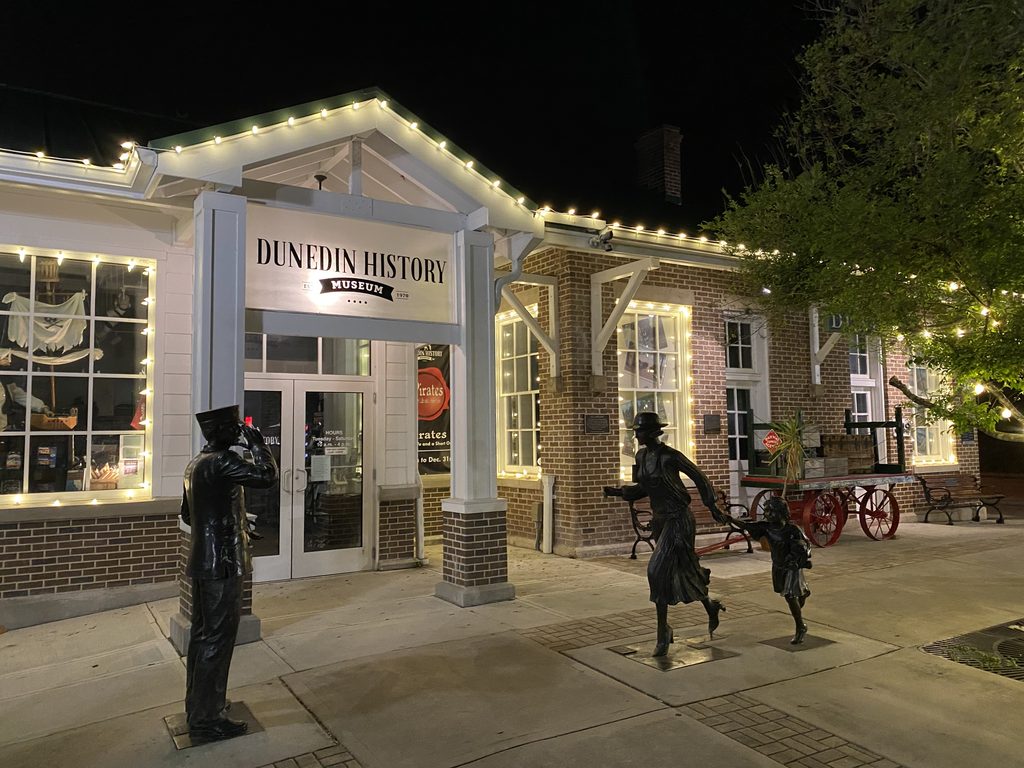
The old railroad depot still stands on Main Street and today houses the Dunedin History Museum.
I think that is one of the best pieces of preservation in town because the building did not have to disappear for the city to move forward.
The railroad itself is gone, but its route continues to influence daily life.
Much of the former rail corridor is now part of the Pinellas Trail.
People who once waited there for trains have been replaced by runners, cyclists, and people walking downtown for coffee or lunch.
The transportation function changed.
The line through the city did not.
The Great Freeze Nearly Changed Dunedin’s Future
Agricultural communities can look permanent until the weather reminds everyone otherwise.
The Great Freeze of 1894 and 1895 devastated citrus across Florida, and Dunedin was no exception. City records describe temperatures falling into the teens and destroying most of the local orange trees. Many grove owners lost everything and left. (dunedingov.com)
Others stayed.
Skinner and some fellow growers replanted.
Within several years, citrus production returned.
That pattern of destruction followed by rebuilding appears repeatedly throughout Florida history. Hurricanes, freezes, fires, economic crashes, and development cycles all leave their marks.
When we look at an old house today, we are often looking at a survivor of more change than its exterior suggests.
The Homes That Connect Us With Early Dunedin
Dunedin does not have one enormous historic district filled entirely with nineteenth-century houses.
Its older buildings are scattered through different parts of the community, which makes finding them more interesting.
One of the most important is the J.O. Douglas House at 209 Scotland Street.
The property is listed on the National Register of Historic Places and dates to around 1880. Douglas, one of the Scottish merchants associated with naming Dunedin, lived there. (pinellas.gov)
Think about that for a moment.
This is not simply a house designed to look historic.
It is connected directly to someone involved in giving the city its name.
That distinction matters.
Another significant historic property is Andrews Memorial Chapel, also listed on the National Register.
The building originally served as a church and was later relocated. Its survival is a good example of how preservation sometimes requires a building to change location in order to remain part of the community.
Dunedin adopted a historic preservation ordinance in 2003, creating tools for voluntary local designation and preservation review. (pinellas.gov)
For people considering the purchase of an older property, it is important not to assume that every old house has the same preservation status.
A century-old home can be historically interesting without being individually listed on the National Register or locally designated.
Those are separate questions.
The 1920s Arrive in Dunedin
Then came Florida’s great real estate boom.
The 1920s transformed communities across the state as developers sold an increasingly romantic vision of Florida to buyers from the North and Midwest.
Dunedin was part of that excitement.
Prior to 1924, city planning records identify Fenway on the Bay as Dunedin’s only subdivision. Then new developments began appearing quickly. By 1925, announcements for new subdivisions were arriving almost every month. (dunedingov.com)
It was an extraordinary period of optimism.
Not all of it lasted.
But many physical traces remain.
The Fenway Hotel and the Jazz Age
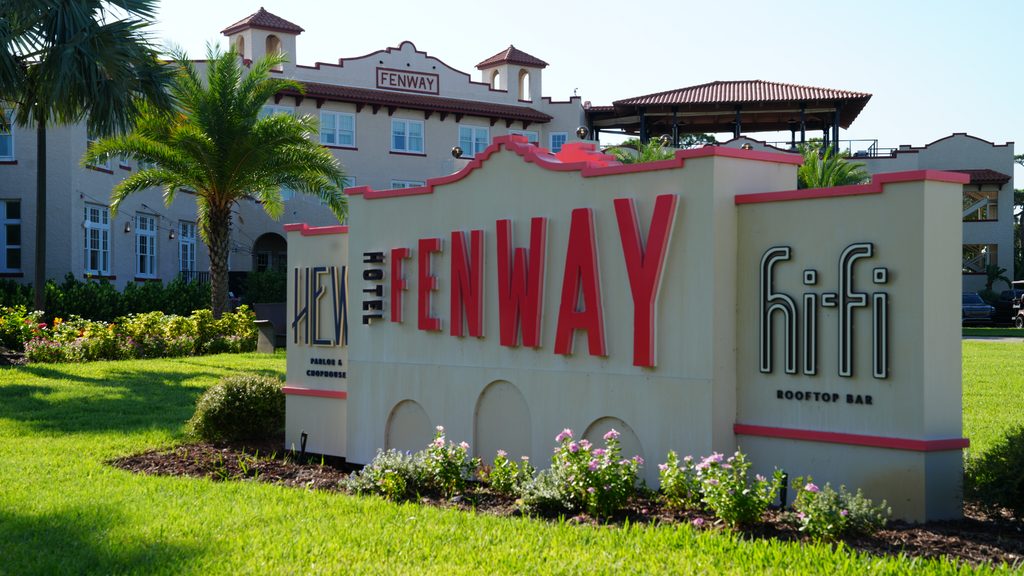
The Fenway Hotel opened in 1924.
If you stand on Edgewater Drive today and look at it, the building still feels substantial enough to suggest how ambitious Dunedin was becoming during the Florida boom.
The hotel welcomed travelers, entertainers, politicians, and other guests. It also became connected to broadcasting history through an early radio station. (visitstpeteclearwater.com)
The hotel’s survival was not guaranteed.
Like many older buildings, it passed through different uses and periods of uncertainty before being restored and reopened.
Today the Fenway Hotel is once again operating as a hotel.
I think that is a particularly successful example of adaptive reuse.
The goal was not to freeze the building in 1924.
It was to preserve enough of its identity that the past remains legible while allowing the property to function in the present.
That is often the most realistic future for an important old building.
The Dunedin Isles Dream
One of the most fascinating development stories came in 1925.
Michigan builder Edward Frischkorn proposed an enormous project known as Dunedin Isles.
The original plan was far more ambitious than what eventually appeared.
City planning documents describe a proposed development covering approximately 3,000 acres, containing thousands of building lots and several man-made islands. One planned island was even supposed to contain a golf course. (dunedingov.com)
The plan projected a massive increase in population.
Then the Florida land boom collapsed.
The Great Depression followed.
The original vision was never completed.
What survived included portions of the development, a golf course, and some notable Mediterranean Revival residences.
That history explains why certain parts of northern Dunedin feel architecturally different from the smaller cottages and bungalows closer to the older core.
Neighborhood design rarely happens by accident.
It usually reflects the aspirations and economics of the period in which the land was developed.
Architecture Tells the Story Without Saying a Word
Dunedin’s architecture is not uniform.
That is part of what makes it interesting.
You can find simple vernacular houses, Craftsman-influenced bungalows, Mediterranean Revival buildings, mid-century homes, ranch houses, cottages, and more contemporary construction.
The city’s architectural guidelines specifically recognize these different traditions and note the influence of Old Florida forms as well as Mediterranean Revival design in areas such as Dunedin Isles. (dunedingov.com)
When I am looking at an older home, I try not to begin with the question, “Is this historic?”
That question is too broad.
I would rather ask:
What period does the house belong to?
What parts appear to be original?
What was changed?
How does the house sit on the lot?
What does the porch tell us?
Was an addition made sympathetically?
What type of foundation is underneath it?
How has the property adapted to Florida weather?
Those questions reveal more than an architectural label alone.
For anyone considering one of these properties, I have written more about that process in my guide to buying and selling historic and older homes throughout Tampa Bay.
Hog Island Becomes Two Islands
The history west of downtown is equally interesting.
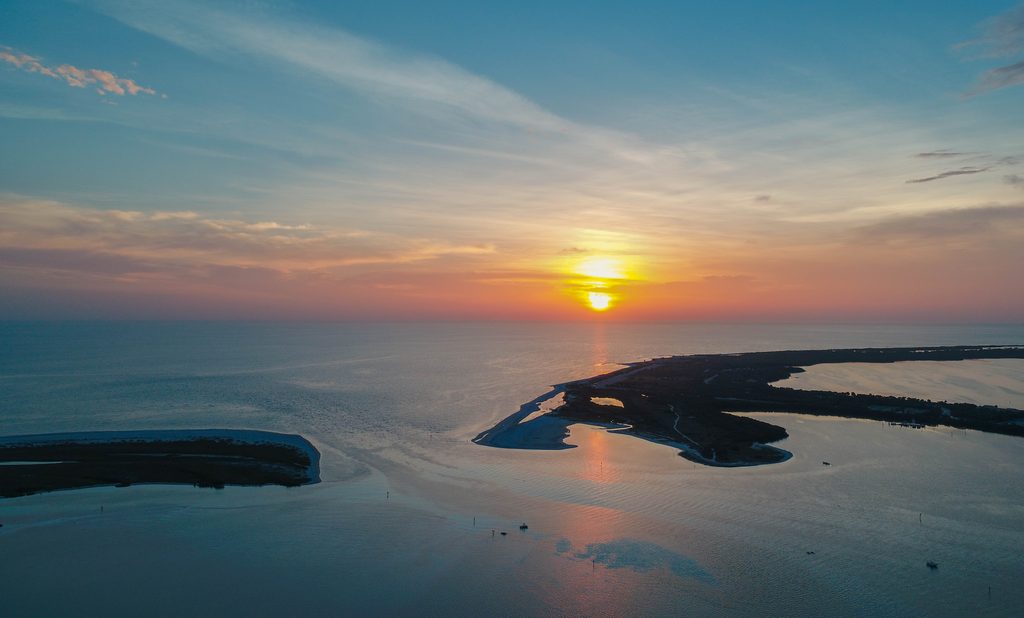
Honeymoon Island and Caladesi Island were once part of a single barrier island known as Hog Island.
Then came the hurricane of 1921.
The storm opened a channel through the island, creating what became known as Hurricane Pass and separating what we now know as Honeymoon and Caladesi. (floridastateparks.org)
This is one of those pieces of local history that changes the way you look at a map.
The geography we treat as permanent can be surprisingly temporary.
Barrier islands move.
Passes open and close.
Storms reshape coastlines.
The Gulf has always been part of Dunedin’s story, and not merely because people enjoy watching the sunset.
How Honeymoon Island Got Its Name
Hog Island did not become Honeymoon Island because of some ancient romantic legend.
The name came from a twentieth-century promotion.
In 1939, developer Clinton Washburn acquired the island and worked with LIFE magazine on a contest that brought newlywed couples to stay in thatched honeymoon cottages on the island.
The marketing idea worked.
The name remained. (floridastateparks.org)
Today, Honeymoon Island State Park includes miles of shoreline, trails, wildlife habitat, and access to the ferry serving Caladesi Island.
For many people moving to Dunedin, access to Honeymoon Island is one of the things that first puts the city on their radar.
But it becomes even more interesting once you know that the name itself began as a carefully crafted tourism campaign.
Florida has been selling the dream of Florida for a very long time.
Caladesi and the Scharrer Family
Caladesi offers a different story.
The island is closely associated with the Scharrer family, whose homestead represents another chapter in Pinellas County’s settlement history. The Scharrer Homestead is recognized in regional cultural-resource surveys as an important early settlement site. (pinellas.gov)
Caladesi feels removed from urban Tampa Bay today, but families actually lived and worked in this environment.
That is easy to forget when we see the island primarily as a destination.
Land that becomes recreational space often has an earlier human history beneath it.
The Dunedin Causeway Changes Access Again
For much of Dunedin’s history, the islands were accessible primarily by boat.
The construction of the causeway fundamentally changed that relationship.
Suddenly, reaching the Gulf became part of an everyday automobile trip.
The causeway helped make Honeymoon Island part of ordinary life in Dunedin rather than something geographically separate from it.
Today, someone can leave downtown, cross the causeway, and be standing beside the Gulf within minutes.
That proximity is one reason Dunedin real estate feels different from many inland Tampa Bay communities.
The town does not simply claim a coastal identity.
The water is physically present in daily life.
Baseball Becomes Part of Dunedin
A completely different kind of tradition began in 1977.
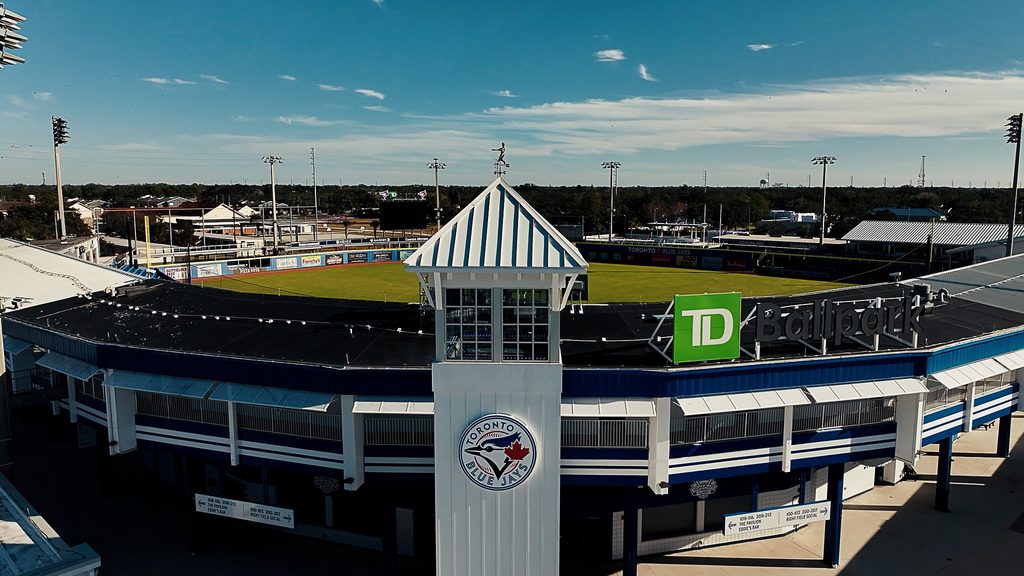
That was the inaugural season of the Toronto Blue Jays.
Their very first spring training game was played in Dunedin on March 11, 1977. Toronto defeated the New York Mets 3-1. (mlb.com)
The relationship continued.
Dunedin has remained the Blue Jays’ spring training home throughout the history of the franchise.
TD Ballpark now serves as the spring home of the Major League team and the regular-season home of the Dunedin Blue Jays. (mlb.com)
Spring training changes the rhythm of the city.
You notice Canadian license plates.
Restaurants get busier.
People walk downtown in Blue Jays shirts.
The relationship has lasted long enough that baseball is no longer simply an event that happens here each spring.
It has become part of Dunedin’s identity.
The Railroad Becomes a Trail
Perhaps no transformation better explains modern Dunedin than what happened to the railroad corridor.
The same transportation line that once helped ship citrus and bring passengers into town eventually became part of the Pinellas Trail.
Instead of trains moving through downtown, cyclists and pedestrians now follow the corridor.
That sounds like a small change until you consider how much it affects the city.
The trail runs directly through downtown rather than bypassing it.
A person riding a bicycle can stop for lunch, shop, meet friends, or continue north toward Tarpon Springs or south toward Clearwater and St. Petersburg.
The old transportation corridor still creates economic activity.
It simply does it at a different speed.
The Dunedin History Museum even maintains a “Rails to Trails” exhibit that explores this transition.
This is exactly the kind of history I enjoy.
The past was not erased.
Its route was reused.
The Small Downtown That Managed to Stay Small
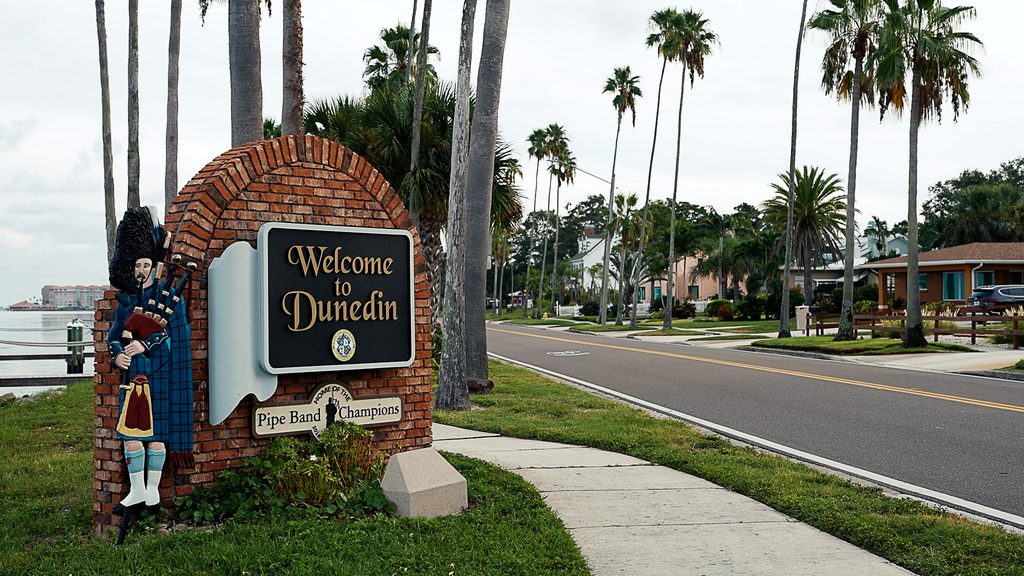
One of the things people consistently respond to in Dunedin is the scale of downtown.
It is walkable.
Buildings generally meet the street in a way that encourages movement between them. Independent shops, restaurants, breweries, public spaces, and the Pinellas Trail create activity without requiring the entire area to feel like a large entertainment district.
That did not happen automatically.
Cities make decisions about density, redevelopment, streets, parking, preservation, and public space.
Those choices accumulate.
Visitors sometimes describe Dunedin as though it were simply lucky enough to remain charming.
I think that description undersells the effort required to protect the character of a place while still allowing it to evolve.
A Town With a Brewery Before Craft Beer Was Everywhere
Another piece of modern Dunedin identity came from beer.
Dunedin Brewery opened in the 1990s and is widely recognized as Florida’s oldest microbrewery still operating.
Today the brewing scene is much larger.
What began as something unusual became part of downtown culture and contributed to the reputation Dunedin has now as a food, beer, and entertainment destination.
The lesson is similar to the railroad story.
A community’s identity is not created entirely in one historical period.
Some traditions are old.
Others become traditions because they last.
Preservation Is More Than Keeping the Oldest House
One of the misunderstandings around historic preservation is that the goal is to prevent change.
That is rarely realistic.
A house built in 1915 probably did not begin life with modern air conditioning, current electrical service, hurricane-rated openings, contemporary kitchens, or the kind of bathrooms buyers expect today.
Older houses survive because people adapt them.
The question is how.
When alterations respect scale, proportion, materials, and the qualities that made a house interesting in the first place, modernization can extend its useful life.
Poor alterations can erase those qualities.
This is why I think buyers and sellers should know the difference between old, historic, original, and restored.
Those words are not interchangeable.
A 100-year-old house can have very few original features.
A substantially renovated property may still retain meaningful architectural character.
A building does not need formal designation to be historically interesting.
And formal designation does not mean nothing can ever be changed.
Property-specific research matters.
Buying a Historic Home in Dunedin
This is where history becomes practical.
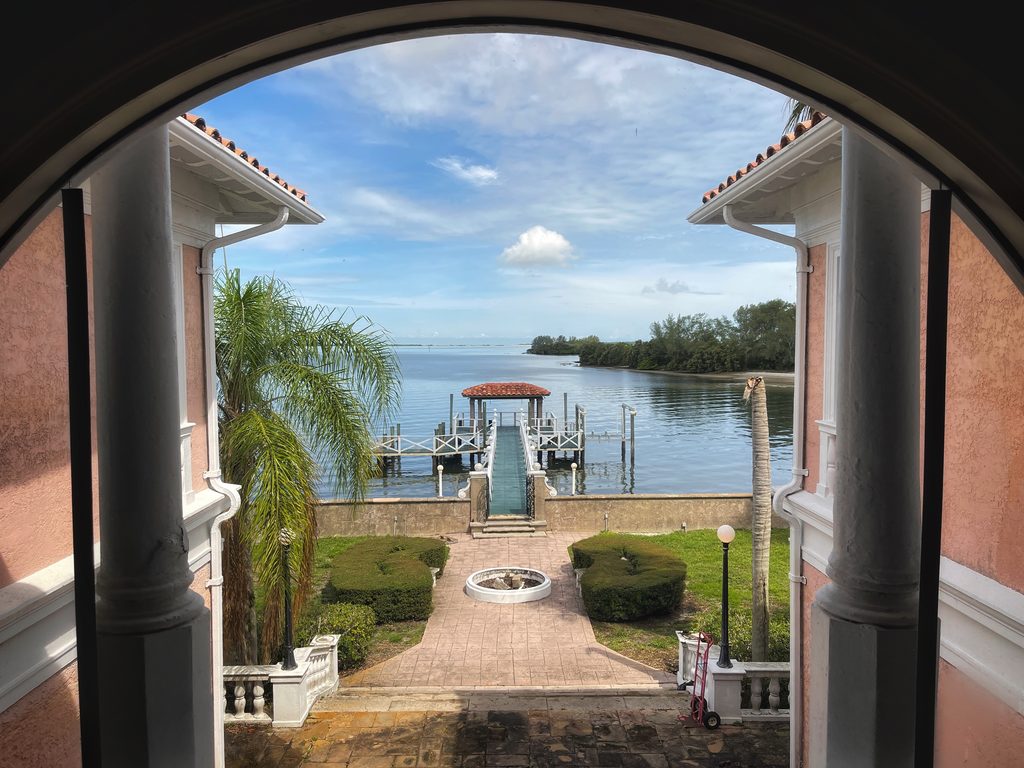
If you are considering buying an older home in Dunedin, I would begin by separating romance from due diligence.
You are allowed to fall in love with the porch.
You should still understand what is holding it up.
I would want to examine the age and apparent condition of major systems, including the roof, electrical system, plumbing, HVAC, foundation, windows, and any additions.
Older Florida homes can also raise questions involving:
- crawlspaces and moisture
- termites and wood-destroying organisms
- prior additions
- flood exposure
- wind mitigation
- insurance
- cast-iron or older plumbing
- electrical panels and wiring
- roofing
- historic designation
- permitting
- property setbacks
- renovation plans
Not every older property will have every one of these concerns.
That is precisely why the analysis should be property-specific.
The goal is not to talk someone out of an old house.
It is to understand what they are buying.
My broader historic and older homes guide explains some of the questions I encourage buyers and sellers to consider before making decisions.
Selling a Historic or Distinctive Home in Dunedin
Selling an older Dunedin home creates a different challenge.
The house may be competing against newer construction with larger closets, modern floor plans, newer systems, and fewer maintenance concerns.
Trying to imitate those houses is usually the wrong approach.
The better strategy is to understand what makes the older property compelling and communicate that accurately.
That might include:
- the architecture
- a particularly good porch
- original woodwork
- historic photographs
- walkability
- proximity to downtown
- mature landscaping
- a connection to the Pinellas Trail
- waterfront or sunset views
- a documented property history
- thoughtful renovations
- a rare lot or setting
But none of those things replaces good pricing.
History does not automatically create value.
Marketing can help buyers understand why a property matters, but the final price still exists within a market.
That combination of storytelling and market analysis is especially important with unusual homes.
You can read more about how I approach representation at Middleton Tampa Bay.
Why I Care About Dunedin Personally
Dunedin is more than one of the places where I work.
It is home.
That changes the way I experience it.
I have photographed the city, walked its streets, watched it change, spent time on the islands, and told some of its stories through my documentary work and through Discover Delightful Dunedin.
The more I learn, the more I realize how much is easy to overlook.
A bicycle ride on the Pinellas Trail follows the path of a railroad that helped create downtown.
A sunset from the Fenway looks across water that once carried commercial sailing vessels.
A trip to Honeymoon Island crosses toward land reshaped by a hurricane.
A house on Scotland Street can lead directly back to the people who gave the town its name.
That is what makes local history worthwhile to me.
It puts depth behind familiar scenery.
Want to Explore Dunedin’s History Yourself?
The Dunedin History Museum is an excellent place to begin.
The museum occupies the historic railroad depot and includes exhibits on early Dunedin, citrus, maritime history, the islands, and the railroad. Its archival collection also includes the Dunedin Times, which began publication in 1924. (dunedinmuseum.org)
The museum also offers walking tours that move through downtown, Edgewater Drive, Scotland Street, and Highland Avenue. (dunedinmuseum.org)
For someone researching an individual property, old newspapers, photographs, property records, maps, permits, and family documents can all help.
One of the most valuable things an owner can do is preserve what they discover.
A photograph sitting in a drawer today may become the best surviving record of a house fifty years from now.
Dunedin Is Still Becoming Dunedin
It is tempting to finish a history article by describing the present as though the story has reached its conclusion.
It has not.
Dunedin will continue changing.
Houses will be renovated.
Some buildings will disappear.
Others will be saved.
The shoreline will continue to move.
Downtown will evolve.
New residents will arrive and begin traditions that people decades from now may think have always existed.
That is how cities work.
The question is not whether Dunedin changes.
The more interesting question is whether it can change without losing the qualities that make it identifiable.
So far, those qualities are still easy to find.
Walk Main Street early in the morning.
Ride the trail past the old depot.
Drive Edgewater as the sun begins to drop.
Look at the houses instead of just the landscaping.
Stand beside the water and imagine arriving here by sailboat instead of automobile.
Then remember that much of downtown was once a cotton field.
It becomes difficult to see Dunedin in quite the same way again.
Buying or Selling a Home in Dunedin, Florida?
I’m Mark Middleton, a Tampa Bay REALTOR® with Middleton Tampa Bay at Compass, and Dunedin is both a community I represent professionally and the place I call home.
My work includes helping buyers and sellers with historic homes, distinctive properties, waterfront homes, and residences throughout Dunedin and the Tampa Bay area.
If you are considering buying a historic home in Dunedin, I can help you understand not only the market, but also the questions that come with an older property. If you are preparing to sell one, my approach combines pricing, photography, property research, storytelling, and marketing designed to help buyers understand what makes the home different.
You can also explore more of the community through Discover Delightful Dunedin and see more of my photography at Mark A. Middleton.
Thinking about buying or selling a home in Dunedin? Call or text me at (727) 871-7653, email MarkMiddleton@Compass.com, or contact me through Historic Homes Tampa Bay.
I would be happy to talk about the house, the neighborhood, and what you are hoping to do next.