
Behind the familiar Main Street is a much older story of people drawn to the water, communities built around it, and a town that had to begin again.
By Mark Middleton
Safety Harbor had barely become a city when much of its downtown burned.
It incorporated in 1917. That September, a fire swept through Main Street, overwhelming the local bucket brigade and leaving the young community with a considerable rebuilding job. It is an unexpected beginning for a place whose name sounds so reassuring. Safety Harbor
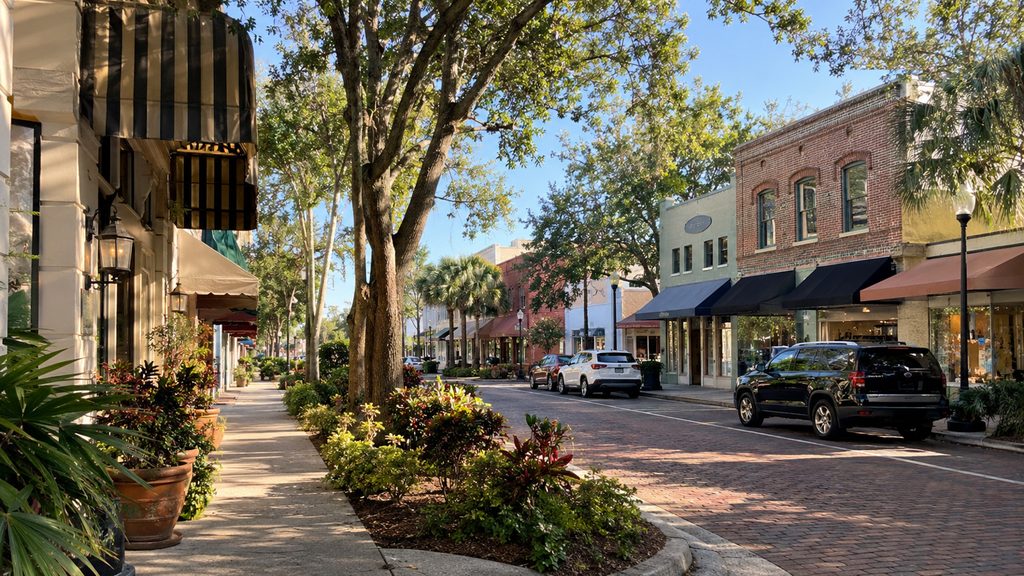
Today, the appeal is easier to see. There is a walkable downtown, a waterfront, places to eat, and parks where an afternoon can pass without much of an agenda. Safety Harbor sits along the western side of upper Tampa Bay, close to the region’s larger cities but with a recognizable identity of its own. Visit Florida
That identity interests me.
When I look at an older community, I want to understand more than when its first house was built. Why did people come here? What made them stay? Which buildings survived, and what disappeared before anyone thought to preserve it?
In Safety Harbor, those questions lead from an ancient mound to a citrus plantation, from mineral baths to a devastating fire, and eventually to the front porches and familiar streets we see today.
The story starts well before there was a Main Street.
Before the Park, There Was a Town
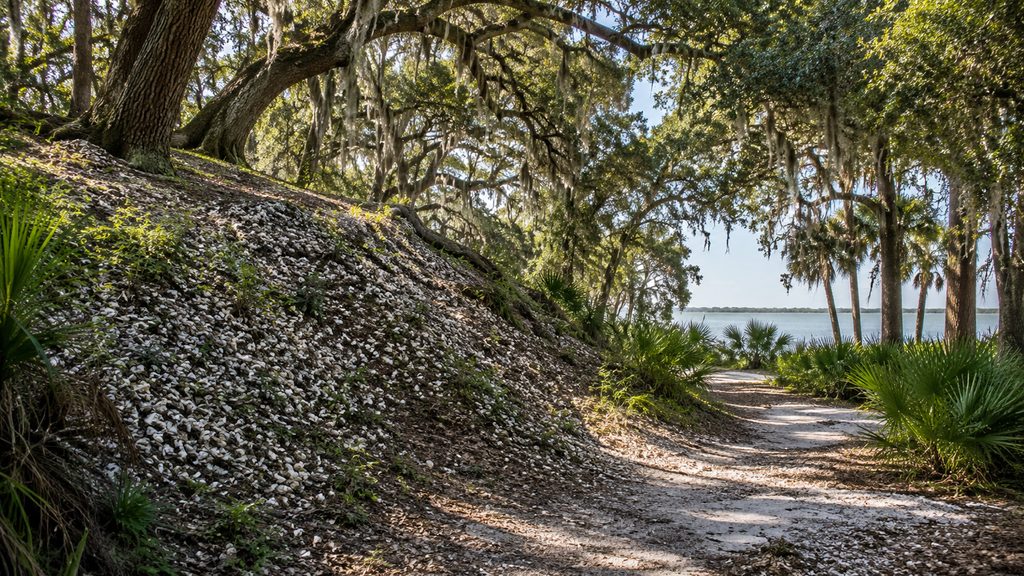
Philippe Park is a natural place to begin. Its shade trees and waterfront setting are inviting, but the mound within the park deserves more than a passing glance. Built from alternating layers of shell and sand, it is the largest surviving mound in the Tampa Bay region, according to Pinellas County. Evidence of posts indicates that a structure once stood on top, possibly a ceremonial building or a chief’s residence. Pinellas County
This was not a convenient hill that people happened to use. People built it.
The surrounding archaeological site is believed to have been the principal town of the Tocobaga chiefdom. It also gives its name to the broader Safety Harbor culture, an archaeological tradition that developed in the region around A.D. 900. Its communities relied on fishing, gathering, and hunting, with villages that could include a platform mound, a plaza, burial mounds, and residential areas.
Think about the work involved in creating that landscape. The mound required materials, labor, planning, and a community with a reason to undertake it. Where visitors now come for a picnic, people once organized their daily lives around a substantial waterfront settlement.
Spanish contact brought profound disruption. Pedro Menéndez de Avilés visited in 1567 and left a small outpost. The encounter forms part of a much larger history of conflict, disease, and displacement.
It would also be misleading to end the Native story by saying that everyone simply vanished. Modern archaeological scholarship connects this history with living Seminole and Miccosukee descendant communities and challenges older accounts that separated them too neatly from Florida’s earlier inhabitants. NPR
For me, this changes how the park should be understood. Its oldest history is not background scenery for the later story of settlers. It is a substantial story in its own right.
Odet Philippe and the Stories That Followed Him
The park takes its name from Odet Philippe, who acquired 160 acres in what is now Safety Harbor in 1842. His family connections extend into the Booth and McMullen families, names that remain familiar across northern Pinellas County. Safety Harbor Chamber of Commerce
His plantation was known as St. Helena. Philippe also became closely associated with Florida’s early citrus industry and is widely credited with introducing grapefruit cultivation to the state.
That agricultural connection is worth remembering. Before this part of Tampa Bay became a place of subdivisions, commercial corridors, and daily commutes, people were evaluating the land for what it could grow.
Philippe’s biography, however, has accumulated an extraordinary amount of embellishment. He is frequently introduced as a French count, a friend of Napoleon, or a surgeon with an adventurous European past. Researchers have questioned those accounts, and some of the details traditionally repeated about him are far less secure than the stories suggest. His ownership of enslaved Africans is also part of the documented history of the property.
I think a place becomes more interesting when we allow its history to be complicated. There is no need to choose between a flattering legend and ignoring a person altogether. We can recognize Philippe’s place in regional agriculture while being honest about the lives and labor that were part of his plantation.
Philippe died in 1869 and was buried on the property, although the precise location of his grave is unknown. In 1948, the county acquired land for the creation of Philippe Park, its first public park. Safety Harbor Chamber of Commerce
An Indigenous town, a plantation, and a public park occupy overlapping ground. Knowing that makes a familiar afternoon beneath those trees feel different.
When People Came for the Water
Farther south, around the springs near the waterfront end of Main Street, another chapter of Safety Harbor developed.
The settlement was known as Green Springs before Safety Harbor became its official municipal name. Early waterfront facilities connected the community to boats bringing people, mail, and supplies across the bay. Before convenient road connections, the water was a transportation route as well as a local resource.
The mineral springs became a reason to make the journey.
By the turn of the twentieth century, visitors were arriving to experience waters promoted for their restorative qualities. The Chamber of Commerce’s history describes trips by ferry from Tampa or stagecoach from Clearwater as a full-day adventure. Safety Harbor Chamber of Commerce
It is an appealing detail because it puts the distance into perspective. A place that now seems like a relatively easy outing once required a real commitment of time.
The springs also acquired their share of legend. Hernando de Soto and the Fountain of Youth appear repeatedly in local accounts, but whether his expedition actually visited these particular springs is uncertain. The familiar story should be treated as local tradition rather than a fully established account of a specific visit.
Fortunately, the documented history is interesting enough without needing a conquistador to validate it.
People traveled here because they believed the water might help them feel better. Businesses formed around that belief. A settlement acquired a reputation, and that reputation gave visitors a reason to keep coming.
The Railroad Changed What Was Possible
In 1914, a railway reached Safety Harbor. The Florida Humanities walking tour recounts that local citizens contributed money to help ensure the line passed through town, creating a direct connection with Tampa.
I like that part of the story because it gives the community some agency. Safety Harbor was not simply waiting for the outside world to discover it. Residents understood the importance of being connected and worked to make it happen.
A railway meant another way for customers, visitors, and supplies to arrive. It also changed how a small waterfront settlement could imagine its future.
The depot stood near Main Street and Ninth Avenue. Within a few years, Safety Harbor had incorporated as a city. The Gabber Newspaper
When looking at an older downtown, it is useful to consider how its streets related to the places where people arrived. The waterfront and the railroad were practical destinations. Businesses and daily routines developed around them.
What now feels like a pleasant arrangement of streets had a working purpose.
September 1, 1917: The Fire on Main Street
The fire broke out downtown on September 1, 1917. Safety Harbor’s volunteer bucket brigade could not contain it. The city’s fire department history records assistance from Tampa and St. Petersburg, with the blaze finally stopped at the post office. Most of Main Street had been destroyed. Safety Harbor
It is difficult to appreciate that loss while standing in a functioning downtown.
A commercial street is where a community conducts its ordinary business. Losing it means more than replacing walls and roofs. It means finding ways to earn a living, serve customers, and continue the routines that make a place work.
One survivor provides a tangible connection to that day. The brick building at 200 Main Street, now associated with the Chamber of Commerce, is identified by its historical marker as having survived the fire. It also served as Safety Harbor’s first town hall and later as a bank. Historical Marker Database
That is the kind of building I would encourage someone to notice twice. First for what it is doing today, and then for what it has already witnessed.
Fire protection developed gradually afterward. The city bought a secondhand American LaFrance fire truck in 1923, adopted early fire and building-safety measures in 1925, and organized its first formal volunteer fire department in 1927. Safety Harbor
The town rebuilt, but the fire is a reminder that a historic downtown is not necessarily an untouched collection of original buildings. Sometimes its character includes the evidence of starting over.
Then the Bay Came Ashore
Only four years later, another disaster arrived.
On October 25, 1921, a major hurricane struck the Tampa Bay region. The National Weather Service’s historical account describes widespread coastal destruction from wind and storm surge. National Weather Service
Safety Harbor’s waterfront was badly damaged. A photograph preserved by the State Archives of Florida shows the wreckage of the springs pavilion. Its accompanying description notes that a building visible in the background had been swept approximately 75 yards. Florida Memory
That distance makes the destruction easier to understand. We are not talking only about roof damage or a few fallen trees. Water had moved a building.
The storm also destroyed the pier and damaged facilities around the springs. In the rebuilding that followed, the replacement pier was placed south of the original location, changing the relationship between Main Street, the waterfront, and the developing resort. The Gabber Newspaper
This is one reason I find old photographs so valuable. A familiar street can appear permanent until a photograph reveals a different shoreline, a missing structure, or an earlier route to the water.
Safety Harbor’s name did not make it immune to the bay. Its history includes both the opportunities the waterfront provided and the destruction it could bring.
Mineral Baths, Hotel Rooms, and the Promise of Feeling Better
The town’s reputation as a health destination continued to develop during the 1920s.
One particularly revealing piece of evidence is a 1924 advertisement for the Pipkin Mineral Wells Bath House, preserved by Florida Memory. It promoted mineral baths, Turkish and Russian baths, massage treatments, and a brick hotel with daily room rates of $3 or $3.50. It even included a chemical analysis of the water. Florida Memory
That advertisement tells us something important: Safety Harbor’s health-tourism history involved more than one property.
There was a market for this experience, and businesses were trying to distinguish themselves within it. The mineral analysis gave the promotion an air of precision. The baths offered treatments. The hotel gave visitors a place to stay.
Those were historical marketing claims, not evidence that the water cured the illnesses mentioned in the advertisements. But the claims help explain why people traveled here and how the town presented itself.
In 1926, the Safety Harbor Sanatorium opened, offering bathing facilities and a large swimming pool. Salem Baranoff acquired the springs and sanatorium in 1945 and developed the operation as a health spa. These are central chapters in the history behind today’s Safety Harbor Resort and Spa. Historical Marker Database
The language of travel has changed considerably since those early advertisements. The desire to leave home, spend time near the water, and return feeling renewed is still easy to recognize.
The History Inside the Houses
For a historic-homes journal, this is where the larger story becomes personal.
A town’s hotels and public buildings tell us how it presented itself. Its houses reveal how people actually lived.
Consider Ingleside at 333 South Bayshore Boulevard, also known as the William B. F. Leech House. Built in 1889, it is documented in its National Register nomination as a two-story frame house with Classical Revival influences. Its history connects seasonal residence with citrus cultivation, including Leech’s work growing and evaluating citrus varieties. NPGallery
There is an especially interesting detail in that record: the property originally fronted directly on the bay. Dredging and fill associated with the construction of Bayshore Boulevard later changed its setting. NPGallery
The house can help us read a shoreline that is no longer arranged as it was when the home was built.
Then there is the 1908 Gingerbread House at 136 Fourth Avenue North, a property that is also part of my own real estate story. I have represented it twice and have written separately about its history and restoration. Historic Homes Tampa Bay
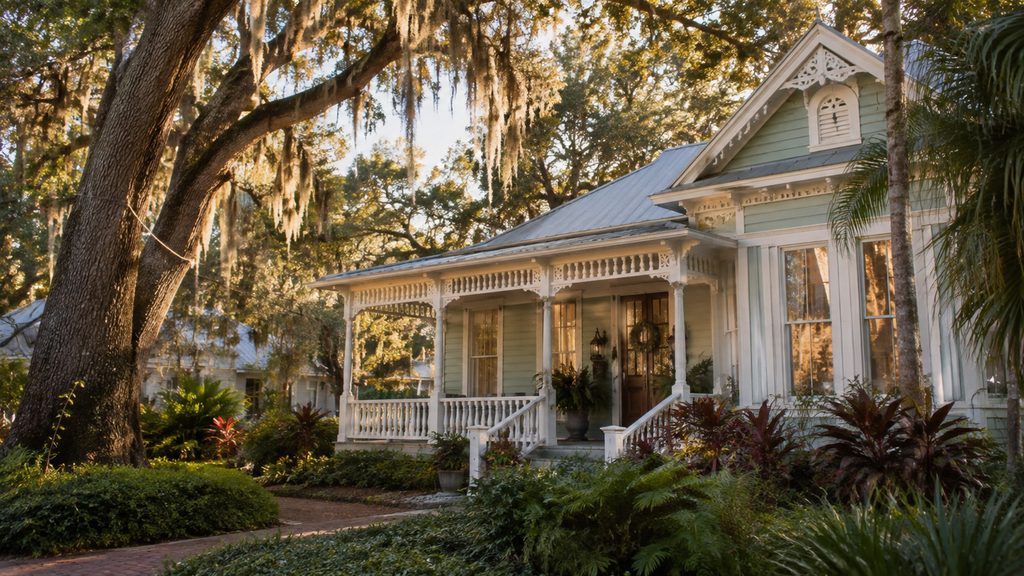
Its historical marker identifies B. Rhett Green as the original owner who commissioned the house and William Fletcher Belcher as its builder. The decorative woodwork gives the cottage its familiar name, but some of its most memorable history has little to do with ornament. Historical Marker Database
According to the marker, neighborhood women gathered there around 1910 to wash clothes because the property had a particularly good well. Electricity arrived in the 1920s, with service limited to certain hours. Indoor plumbing followed in the 1930s, when a closet was converted into a bathroom. Historical Marker Database
I find those details more revealing than a general description of “Old Florida charm.”
They describe actual work. Laundry had to be done. Water quality mattered. Electricity was not something to take for granted throughout the night. A bathroom was an improvement that had to be fitted into a house already standing.
There is also something wonderfully specific about a town celebrated for mineral water having a neighborhood laundry gathering organized around a less sulfurous well.
You can read the fuller story in my article about Safety Harbor’s 1908 Gingerbread House.
These homes make the passage of time visible. Their additions, altered rooms, and surviving details record decisions made by people trying to make everyday life a little easier.
The Women Who Kept the Books Coming
Not every important chapter in a town’s history begins with a developer, a hotel owner, or a disaster.
Safety Harbor’s library began in 1938 through the work of the Women’s Civic Club, supported by Works Progress Administration funding. The women organized book teas to collect donations, and by April 1940, approximately 800 books were circulating. Safety Harbor
When funding became uncertain, they kept working. They held a street carnival and introduced a small adult service charge to help keep the library operating.
In 1946, Baranoff donated two lots for a library building. That building opened in 1949, and the club continued supporting the library for decades before transferring operations and selling the property to the city in 1985. Safety Harbor
This is the kind of local history I do not like to overlook.
It is easy to remember the person whose name appears on a large property. It takes a little more effort to remember the people collecting books, organizing fundraisers, and making sure a useful institution survived another year.
A community needs both places and people willing to care for them. The library’s history offers a very practical example of what that care looked like.
A Historic Town Is Never Finished
Safety Harbor today is not a preserved photograph of any single year.
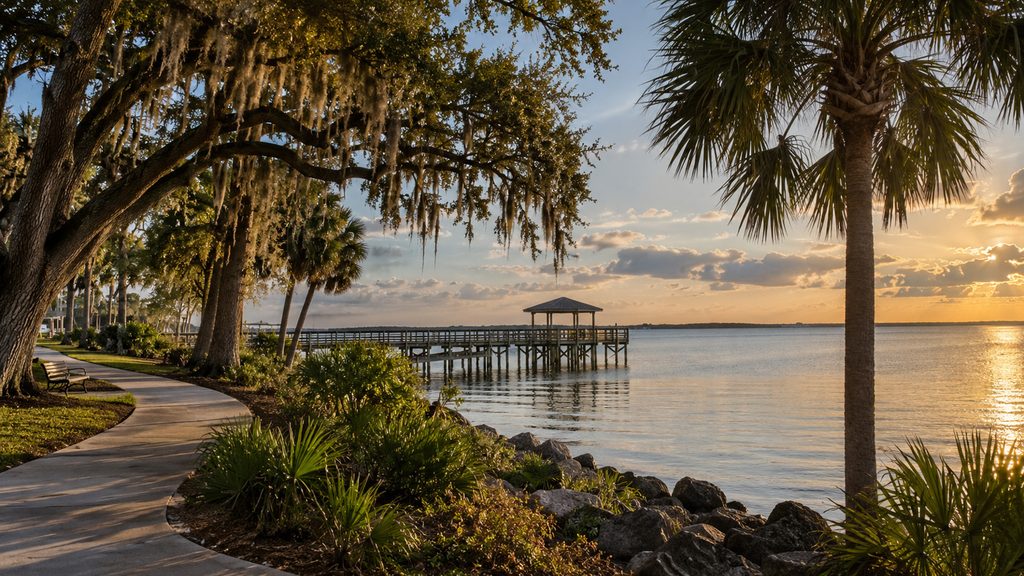
Its waterfront, parks, shops, restaurants, cultural spaces, and residential streets belong to an active community. Visitors can explore that history through the Museum and Cultural Center and a Florida Humanities walking tour that connects a dozen local stops. Visit Florida
The records are still being assembled, too. The Safety Harbor Public Library maintains historical collections of photographs, postcards, publications, and newspapers. Its digitized Safety Harbor Herald collection includes more than 1,500 issues spanning 1919 through 1989. Safety Harbor
The library also seeks historical photographs of local homes, businesses, and people for preservation. That effort matters because some of the most useful evidence may still be sitting in a family album rather than a public archive. Safety Harbor
For someone who owns an older house, this is a good reason to keep photographs, documents, and the stories passed along by previous owners. A picture taken for a birthday party might accidentally preserve the clearest view of a porch before it was enclosed. A family letter may explain who lived in an addition and why it was built.
We do not always recognize a historical record while we are creating one.
Look Again Before You Leave
What I appreciate about Safety Harbor is how many different kinds of history can be encountered within a relatively small area.
There is the history of a community built long before European settlement. There is agricultural history, the business of selling a restorative holiday, the loss of a downtown, and the patient work of rebuilding. There are homes where the arrival of plumbing was a major event and a library sustained by people who thought their neighbors ought to have books.
Knowing those stories changes what I notice.
A surviving commercial building becomes more than another storefront. A decorative cottage becomes a record of household life. The view from Philippe Park becomes more than a beautiful view.
That is why I write about places like Safety Harbor. Not because every older building is grand or every historical account is comfortable, but because understanding a place makes it harder to treat it as interchangeable with somewhere else.
The next time you head downtown for lunch, give yourself a little extra time. Read a marker. Notice the houses on the next block. Consider what might once have stood between the street and the water.
There is considerably more here than a pleasant place to spend an afternoon.
Considering a Historic Home in Safety Harbor?
My interest in these communities brings together history, photography, and real estate. I share more local stories through Discover Delightful Dunedin, along with my photography at Mark A. Middleton. Each offers another way to explore the places and details that draw my attention.
I’m Mark Middleton, a Tampa Bay REALTOR® and founder of Middleton Tampa Bay at Compass. I help people buy and sell historic, waterfront, and distinctive homes in Safety Harbor, Dunedin, Clearwater, St. Petersburg, Tampa, and the surrounding communities. Whether you are considering an older home or preparing to sell one that has been part of your life for years, I would enjoy hearing its story and learning what comes next for you.
Call or text me at (727) 871-7653 or email MarkMiddleton@Compass.com.